Tuesday, August 30, 2016


Never Water Again


If you are living in the South-West of the US, you know the dilemma: To be a good citizen and water-wise and at the same time having a beautiful garden is not easy.  But there are gorgeous plants that can help you to achieve just that.


Visiting once the San Francisco Bay area (especially the Ruth Bancroft Garden) and Monterey - and everything in between - I fell in love with Ice Plant aka Blue Chalk Fingers aka Senecio Mandraliscae. There are few, if any, plants this silver-blue! 

The Succulents and More blog reports: “This spreading succulent from South Africa produces stems that crawl along the ground and eventually form fairly dense mats. It’s VERY drought-tolerant but grows more quickly with regular irrigation. Senecio Mandraliscae is perfect for larger areas, and like many other succulents, and is extremely easy to propagate. Simply stick a cutting in well-draining (sandy) soil and it will begin to root within a week." 

The Ice Plant / Chalk Finger makes a marvelous ground cover and fits well together with a group of Agave "Blue Glow".


Help to Fight the Drought - Become Water-wise:
Small adjustments can have a big impact. Get nearly 100+ water-saving tips in these articles

http://wateruseitwisely.com/site-map/

http://wateruseitwisely.com/100-ways-to-conserve/

http://wateruseitwisely.com/100-ways-to-conserve/landscape-care/principles-of-xeriscape-design/low-water-use-plants/


<><><><><>


Saturday, July 2, 2016


The Greatest Garden Hose Ever - NEW PRICE

Only USD39.99 for a 100ft Expanding Garden Hose

Last month I helped a friend during her month-long trip to Europe to keep the garden in shape - which meant to water it almost daily during this heat wave...  I expected to haul heavy garden hoses through her extensive property.  But no: She had a wonderful lightweight garden hose that looked like crinkled fabric and expanded from one end of the garden, around the house, and all the way to the other side of the property fence. 


She showed me how to use this amazing garden hose: 
  • First, you roll the hose completely from the holder
  • Only then, you open the faucet
  • Once the water runs through the hose, it expands to its full length

It works like a charm! The hose is so light and so easy to use, it's suddenly a total pleasure to water the garden, and so much faster. No twisting and kinking and forth and back running, like it used to be with the old, heavy garden hoses. 

I wrote this article two summers ago, and now the prices

for this wonderful garden device dropped to less than half:


Order here:


  • Expands 3 times its length when water pressure is on
  • Contracts to its original length when pressure is off
  • Weights 5 times less than traditional garden hose
  • Self-drains itself when not in use
  • Never tangles, twists or kinks
  • Easy to store in very small places


Check out their whole collection of great watering tools with free shipping!

★LIGHTWEIGHT WILL NOT TWIST TANGLE OR KINK. This hose does everything the other hoses claim only better. Don't waste your hard earned money on products that work for a couple days or weeks then fall apart.
★SOLID BRASS ENDS. No more leaks around the plastic fittings. We designed the mold to give you the best brass fittings available today. Don't be fooled by imitations.
★INDESTRUCTIBLE DOUBLE LAYER LATEX CORE. We talked to our engineers after hearing about all the other hoses leaking and came up with a product that will hold water at pressures that are out of this world.
★12 Month Warranty for Manufacturing


Watering Your Garden:
Never water your yard in the heat of the day. First, you waste a lot of water due to evaporation and second it CAN burn your grass or plant leaves. Best time to water is from 5am until no later than about 8am.

You are doing fine to water two or three times a week, soaking the soil thoroughly. Those people who water every single day and over-water are creating lawns that develop short shallow roots and are susceptible to dying in the winter if there is a bad freeze. 

In the summer their grass requires MORE water as the roots are not digging down deep looking for a water source either nor are they able to retain the moisture being that close to the surface. The deeper the roots the better your grass will survive a long hot and dry summer and a freezing cold winter. 

In flower beds, Mulch is your best friend to help retain water/moisture in those areas and keep them from drying out.

<><><><><>


Sunday, June 12, 2016


How to Care for Azaleas and Rhododendrons


Rhododendrons are a gardeners delight - and so are Azaleas.  Both thrive in acidic, well-drained soil with lots of organic matter.  But what to do when your is clay or loam?


.


The American Rhododendron Society gives lots of valuable tips:

"Before planting test the drainage, dig a hole about 10 to 12 inches deep and fill it with water. Then after it drains, fill it with water again and see how long it takes to drain.  If the hole drains within an hour you have good drainage.  If the water has not drained out of the hole within one hour, the soil is poorly drained and you must correct the drainage problem before planting.  Planting in raised beds is the best solution in heavy soils." 
.


.


Soil pH Value:

"Rhododendrons and Azaleas will let you know if the pH is not correct.  If the leaves turn yellow between green veins then you most likely have a pH problem.  Materials commonly used to lower soil pH are wettable sulfur or ferrous sulfate.  Do not use aluminum sulfate to acidify the soil; it is toxic to rhododendron and azalea roots.  Avoid planting azaleas near concrete sidewalks, driveways or foundations that may leach out lime which raises the pH."
.


.
Soil Mix:  
"About half of the planting medium should be organic material.  Combinations of sphagnum peat moss, pine or fir bark fines, compost, and aged, chopped leaves should be worked into the soil to a depth of about 12".  Oak leaves are excellent."  Read more tips at their website.

.

The South Shore of Nova Scotia, Canada, is blessed with a mild climate, perfect for Rhododendrons.  No wonder that there is such an abundance of Rhododendron in all colors in every garden and here, the Rhododendrons are not just small shrubs, but huge ones, almost tree-like.  See images of gardens on the South Shore at a former blog post.


<><><><><>


Enchanting Shade Gardens


Shade gardens can be as lovely and even more interesting than sunny flower beds.  One of the advantages of deciduous shade trees for example is that many lovely flowers which require spring sun but summer shade will grow beneath them: Anemones, Trout Lilies, Shooting Stars, Trilliums, Bleeding Hearts, Foam Flowers, Primulas, Salomon's Seal, Goats Beard, Azaleas and Rhododendrons.  A great benefit is that flowers grown in shade last longer and maintain their colour intensity better than those grown in full sun, such as Heucheras or Hostas. 
.


Another tips for very dark and dry shade areas: Get bright, light colored, large planters to place your flowers in, and if there is a fence or dark wall behind, decorate it with lots of mirrors or a white trellis.


.
Nutritious Soil and Sufficient Water.

No matter where you garden - in shade or sun - your plants will only thrive when you feed them well with the right soil, compost and regularly watering, especially near or beneath trees and large shrubs. Trees take up all the moisture (even prevent rain to reach the soil) and nutrients, so there is nothing left for your attractive flowers if you don't soak the soil every other day. 


.
What to Plant in Shade Areas?
Often there is not only light shade, but almost dark areas underneath a group of trees. Choose the lightest colors you can find in flowers and leaves, such as yellow or light copper Heucheras, white Bleeding Hearts, white or pink Astilbes, orange Azaleas, white, yellow or light pink Rhododendrons or the classic, white-blooming Hydrangeas.
.


.


.

.


.

.


.

Find a long list of plants for for different types of shade for gardening zones 3 - 7 at Canadian Gardening  or at a former post of this Garden-Dream 
blog, including images of shade-loving plants.


<><><><><>


Friday, December 25, 2015


Fantastic Illuminations at Longwood Gardens, Philadelphia

Living or traveling in the Philadelphia, PA, area any time from end of November to January 10th? Don't miss the enchanting garden illuminations at Longwood Gardens!


Not only the Conservatory / Glass Houses are decorated with beautiful lights, but almost every tree in the extended gardens is magically illuminated.  A delightful experience that brings you into the holiday mood. I wish I would have had a better camera that my little pocket one - or being a better photograph : ) but I hope these images will invite you to experience the Longwood Gardens during the dark time of the year. 
.


.
Try to come early in the afternoon, around the time when the sun sets, not when it is already dark, to see a bit more of the gardens, and to get the best sun-set photo illuminations.
.


.
Choose one of the “non-peak days” which are Mondays through Fridays from November 26, 2015–January 10, 2016, excluding December 26–January 1.
Admission is $17 for seniors, 5-18 years $10, and adults $20. There is also a group discount and military discount. Parking is free.
.


.
Did you know Philadelphia is America’s Garden Capital and Longwood Gardens is a part of it all? With more than 30 public gardens, arboreta, and historic landscapes all located within 30 miles, the Greater Philadelphia region has more gardens in close proximity than anywhere else on the continent! See all of the gardens that make this distinction possible.
.


.
The outdoor holiday lights begin to come on at 3:30 pm and the Open Air Theatre fountain shows run continuously throughout the evening. 
Dine at the 1906 Restaurant at Longwood Gardens and experience culinary artistry as fine as their horticultural displays. Make an early reservation as the 1906 Restaurant is often booked out.
.


.


This Google Map show the location of Longwood Gardens.
.


.
No reservation required at The Café
Enjoy your meal in one of three rooms: "The Lodge," with a central fireplace and expansive views of Longwood; "The Founder's Room," honoring Founder Pierre du Pont and his many contributions to the Gardens; and "The Gallery," showcasing artwork created by students in Longwood's Continuing Education classes.  Seating is first-come, first-served. 

.

.
Once you enter the Gardens, you may stay as long as you wish. If you wish to leave and re-enter—no problem. Just be sure to stamp your hand.
.

.


.
.


Enjoy your visit at Longwood Gardens,

not only for the Christmas lighting, 
but year-round!


What others are writing about the history of the Longwood gardens:
"Longwood Gardens is in the heart of the Brandywine Valley about 30 miles west of Philadelphia. It lies on just over 1,000 acres of land, with 20 themed gardens and a huge, historic glass conservatory."

"The 202-acre parcel of land now comprising just a small part of today's Longwood Gardens which was first purchased by the Peirce family in 1700 and generations of this Quaker family continue to live and farm there. Two brothers, Joshua and Samuel, had a love affair with trees and began to plant a great variety of species in 1798. By 1850, it was a well-known arboretum called as Peirce's Park and today, these grounds with their wealth of deciduous and evergreen trees have been open to the public for well over 200 years.
Strangely, this fact is due entirely to the gun-powder baron, Pierre S. du Pont, who purchased the property when he heard that the new owner was poised to sell the ancient trees as lumber in 1906. He restored the property and until his death in 1954, du Pont made Longwood Gardens a spectacle for millions of visitors, spending over $25 million in its 45-year development during his lifetime."

The grounds are expansive and visitors can rent a an electric scooter for $15.  Wide lawns for kids to play as well as garden after garden for adults to enjoy: Italian and French-inspired pool and fountain displays, an English-style topiary garden, a large and impossibly lush traditional rose garden, a peony and wisteria display, as well as a forest walk and meadow. Perhaps the most impressive part of Longwood Gardens, though, is the First World War era conservatory with its all season glass rooms that feature everything from bonsai to orchids." 

For more information, go to the Longwood Gardens website


Thursday, November 26, 2015


Delightful Gardens - Even in the Midst of Winter


.
Winter doesn’t need to be a boring time in the garden. Changing seasons gives you a chance to appreciate the details in your garden landscape that you often miss once the leaves are out.
A few winter stars will take center stage and look best against snow and blue skies:
.


.

Start with one or several blue-silver Colorado Spruce and, trees with colourful or tactile bark: Paperbark Maple, Paper Birch, colored-twig Dogwoods, a Crab Apple or Strawberry Tree will act as an anchor for the rest of the planting.

Mid-level shrubs that are blooming in Winter such as Witch Hazel or shrubs with berries: Winter Berries or interesting evergreen leaves such as Boxwood, Ilex / Holly or Bay Laurel can be a fantastic underplanting.

Low-growing ground cover such as Snowdrops, Lenten Rose, Crocus and Winter Aconite or foliage such as Bergenia Cordifolia should be planted in generous numbers, anywhere from fifteen to thirty young plants at least to make an impact. The same is true for other plants and shrubs: as more are planted from one type as greater the visual epiphany.
.


.
Prepare Your Garden for Winter and Spring


  • Don’t cut down late fall blooms, especially not Sedum Autumn Joy or ornamental grasses. They are show pieces in frost and snow.
  • In areas where it snows all winter, all the available water can freeze, which makes finding drinking water a challenge for birds. Ensure regular visits from a variety of birds by using a bird bath with a warmer, or even a simple heated dog bowl to provide a steady source of water.
  • Plant lots and lots of bulbs, fifty to ninety of each for DaffodilsTulipsAllium etc. 


.

Have a look at winter garden images on Houzz.

And if you live in the UK, don’t miss to visit these gardens in Winter, recommended from The Guardian:

Cambridge University Botanic Garden
A south-facing valley makes the most of the winter light.

Sir Harold Hillier Gardens, Romsey, Kent
Features more than 650 plants that shine in winter.

Wakehurst Place, West Sussex
Beautiful winter beds and a host of witch hazels and daphne.

Bodnant, Conwy, Wales
A winter garden that opened in 2012 is already captivating visitors.


Wednesday, November 25, 2015


Fabulous Fall Color Perennials

.
Annual flowering plants have a finite life: they are called annuals, since they complete their life cycle in September, latest early October of each year.   So, think about Fall colors in early Spring, before you even plant your seasonal Summer blooms.  They look great, not only in flower beds but also in containers:
.
Sedum Autumn Joy.
.


.
This lovely plant produces a broad flower in a variety of colours that cover the range between pink / red / bronze and magenta. They work well in containers and certainly in the garden where butterflies will find them.
.

Chrysanthemums.
.


.
The introduction of Belgian Mums means you can now purchase the most gorgeous new varieties for less than the old-fashioned ones and with an amazing amount of flowers. You can’t get better value in Fall for your bucks than that. In cool weather, they last up to six weeks.  They tolerate early-season frost, and with some luck, they may come back next year.  Plant them later in garden beds and give it a try. Most of the time I could get some of them back, blooming in next years season, albeit with a bit less blooms than in the first year - or I should have added more compost to their soil…

If you have a chance to visit the Chicago Botanic Garden or Longwood Gardens south of Philadelphia, you will be overwhelmed by the beauty of their Chrysanthemums.

.
Roses.
.


.
Rose bushes generally bloom a second time - provided you cut their first flowers immediately after . Fall Rose blossoms lasts much longer than the spring production, due to the cool temperatures this time of year. There are often great deals on Rose bushes in Fall at plant retailers.  All you have to do is prepare the soil with lots of triple mix and plant them. Shrub Roses such as Rosa Rosae will survive the Winter without protection, but many others need to be mounded up with soil or mulch about 30 centimetres in late Fall.

.
Ornamental Grasses.
.

.

They always look best in autumn, when they have the most attractive seed heads that you can imagine, swaying in the breeze. Come winter, the seed heads are frequented by Chickadees and Sparrows. Watch out when you are buying ornamental grasses, make sure that you choose the clumping varieties and not the ones that travel by roots and rhizomes around your yard and under your fence to the neighbours.

.
See at HGTVgardens webpage photos of 27 ideas for using fabulous Chrysanthemums indoors and out.  And don’t forget to plant bulbs for Daffodils, Tulips, Crocus and other early Spring flowers - before the first frost comes up.


<><><><><>


Friday, June 19, 2015


3 Tips for Your Ottawa Summer Garden

.


This month's weather is almost perfect for gardeners - enough rain and sunshine lets the flowers flourish - but also the weeds : )   Here's a list how you can even more improve your summer garden:


1. Corn Gluten Meal is not only a great fertilizer, but also may suppress weeds.
I used corn gluten meal in the past to help my roses become healthy again, when they got black spots and fungus. Misted them first with water, and then sprinkled the corn gluten meal on it.
At least one point where gluten is useful  : ) just kidding.

How and when to apply it can be found on Ottawa’s website:
http://ottawa.ca/en/residents/water-and-environment/lawn-and-garden/use-corn-gluten-meal-get-rid-weeds-0
and also on
http://www.canada.com/story.html?id=df00e529-cf60-430d-822f-8165ff458cb8

Important:  If you apply corn gluten meal anytime before or after that window, the product’s efficacy for weed control falls through the floor. Also: do it yourself on a day with no wind if you use it in powder form (cheaper than the pellets that are sold in Garden Centers.  You will also save lots of money on the so-called “lawn-care” companies, who do not even care for already existing weeds in your lawn, such as Plantains and Dandelions.
It can also be sprinkled on cracks in driveways and sidewalks without fear of harming children or pets.
I read that Corn Gluten Meal can be purchased at most livestock feed stores in powder form. It would probably be much cheaper than buying something with a label on it for weed control.  Another option is CostCo, who usually carries it in spring, or get it from Rona Home & Garden.
.


.

2. Mulch
Mulch, mulch and mulch more, if you haven’t already in spring.  It helps to retain moisture in the soil, suppresses many weeds, and keeps the soil cooler during summer heat.
Rona has great NATURAL CEDAR MULCH for only $2.99 for 56 litters.


3. Which - invasive - plants are not recommended in your garden
From Day Lilies to Lily-of-the-Valley … (both my pet peeves  : )
Many non-native invasive species have already reached Ottawa.  Garlic mustard, swallow-wort (also known as dog-strangling vine), common buckthorn and glossy buckthorn are common in many of our natural areas, crowding out the native species that should be there.

http://ottawa.ca/en/residents/water-and-environment/plants-and-animals/what-are-invasive-species

http://ottawa.ca/en/residents/water-and-environment/lawn-and-garden/use-corn-gluten-meal-get-rid-weeds-0

.


LAST BUT NOT LEAST

  • Don’t forget to water the soil (not over the flowers) when it hasn’t rained for three days.  
  • Cut all the faded flowers to avoid self-seeding on places you don’t want them and also to clean up your flowers beds.
  • Prune flowering shrubs after the blooms get ugly
  • Mulch if you haven’t already, it keeps the soil longer moist (water the soil well before applying the mulch!)
  • Dig out Dandelions and Plantains (with their roots)
  • Side dress flower beds with compost or manure or feed with fish emulsion
  • Give your houseplants a summer vacation outdoors (in the shade!)
  • Fill your bird bath regularly with fresh water - after cleaning it 


Enjoy your Summer garden and smell the Roses : )


<><><><><>


Saturday, March 28, 2015


Must-See for Gardeners in San Francisco

.
The Golden Gate Park is huge, it stretches for miles.  A short distance from the Eastern end of the park is the highlight located - at least for plant lovers - the Victorian Plant Pavilion, called the Conservatory.

For arts lovers the highlight is for sure the De Young Museum, the Fine Arts Museums of San Francisco, just a mile to the west from the Pavilion.  So, if you have seen enough art, enjoy the lovely plants at the Conservatory.
.


.

The "Conservatory" describes itself:  "This gem of Victorian architecture has a long and storied history, and is the oldest public wood-and-glass conservatory in North America. As a city, state and national historic landmark, the Conservatory remains one of the most photographed and beloved attractions in San Francisco."

.


.


.


.


.


.

The Conservatory of Flowers is a Victorian wood-and-glass greenhouse, filled with exotic tropical plants and flowers. Conservatories were fairly common among North American aristocrats in the 19th Century.  Wealthy citizens erected greenhouses on their estates and created glass rooms in their urban mansions.  Tropical plants were brought to California from around the world by explorers and botanists.  Some were even hired by collectors to stock their greenhouses. 

.

<><><><><>


1,000+ Heirloom Seeds for Fruits, Flowers and Veggies

.
The New York Times wrote:
"Founded in 1852, Petaluma has a pretty downtown lined with Victorian-era iron-front buildings. It’s anchored by the glorious 1920s Sonoma County Bank building with huge arched windows and 30-foot hammered-metal ceilings, now home to the Petaluma Seed Bank and Baker Heirloom Seed Company."   
.


.

Petaluma, north of San Francisco is indeed a lovely town, and visiting the Seed Bank is a MUST for every gardener!  At least for those who do not want to grow and eat "Monsanto Products" - as everything the Heirloom Seed Bank offers is pure, natural, and non-GMO!  
.
If you are in the Bay area, Sonoma or Napa Valley, make yourself the pleasure to stock up the ingredients for healthy garden products, with flavor and taste you might remember from your granny's garden harvests. 
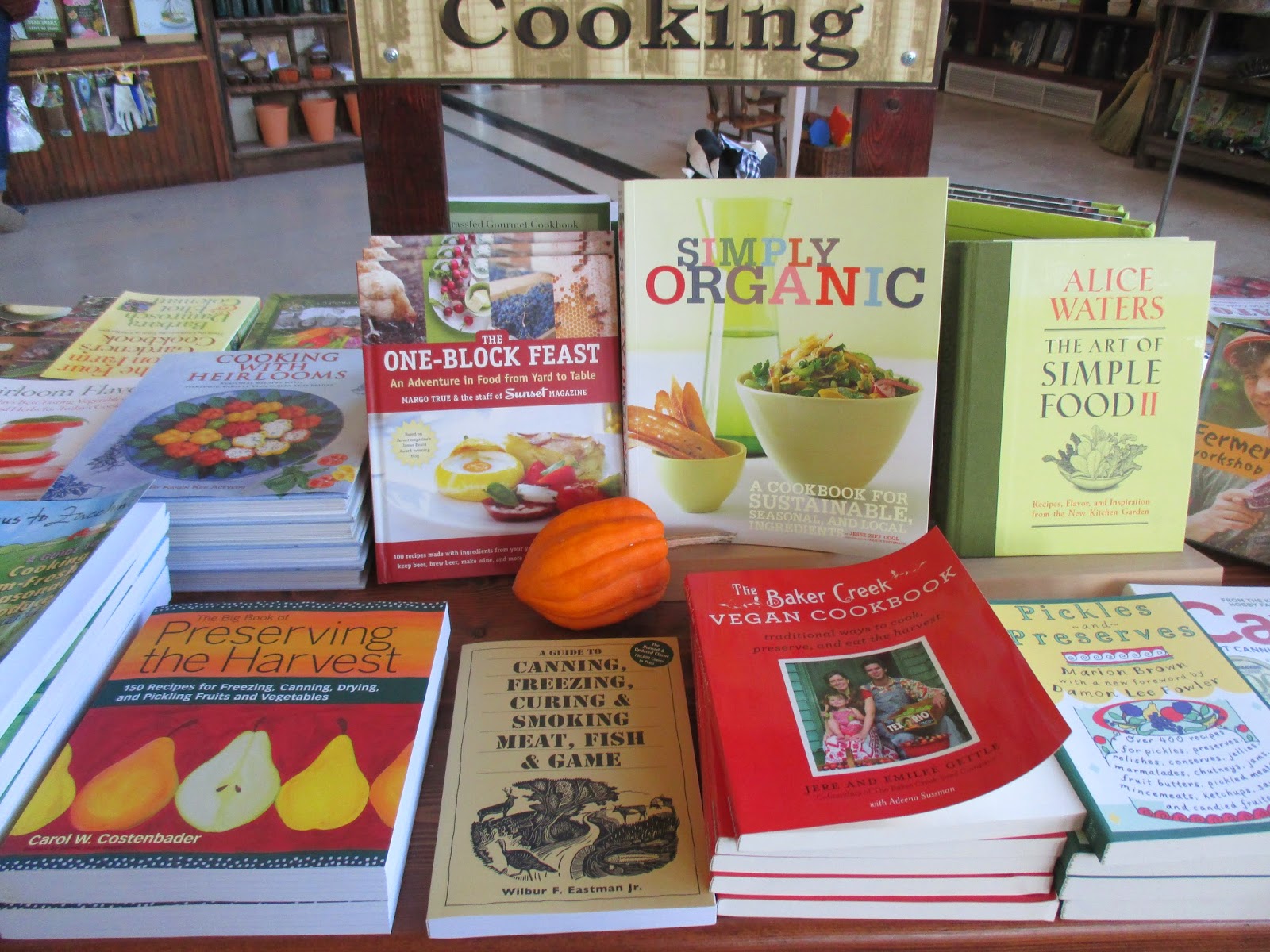
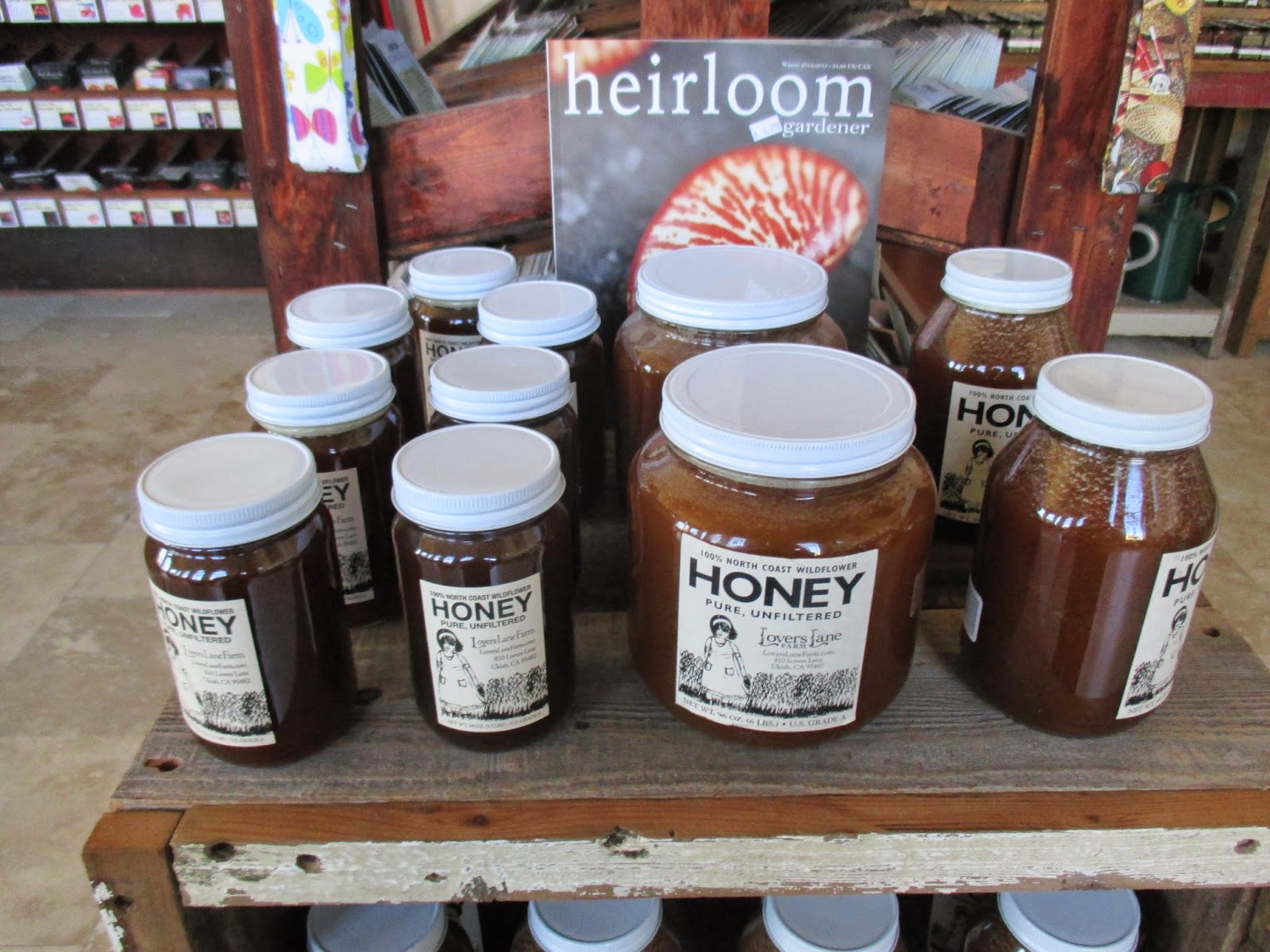
You will find lots of books, Honey, garden tools, and everything a gardeners heart might desire, beside more than thousand heirloom seeds. Here are some photo impressions to "wet your appetite".
.


.


.


.


.


.


.


.


.

Petaluma Seed Bank
199 Petaluma Blvd. North
Petaluma, CA 94952
Phone (707) 773-1336  


If you are wondering what a Seed Bank is - these heirloom seeds are sold in a former bank in Petaluma - but that's just a fantastic name and a coincidence that a bank resided once in the same building where this store is now located. 
.
According to Wikipedia: A seed bank (also seedbank or seeds bank) stores seeds as a source for planting in case seed reserves elsewhere are destroyed.  It is a type of gene bank.  The seeds stored may be food crops, or those of rare species to protect biodiversity. The reasons for storing seeds may be varied. In the case of food crops, many useful plants that were developed over centuries are now no longer used for commercial agricultural production and are becoming rare.  Storing seeds also guards against catastrophic events like natural disasters, outbreaks of disease, or war. 
.
Read also: How to Save Seeds by Modern Farmer and a photo article by the LA Times about the Seed Bank in Petaluma.

.

<><><><><>

.