Showing posts with label Tulips. Show all posts

Monday, October 25, 2021


Plant Cheerful Spring Flower Bulbs Now


Did you already plant your spring bulbs?  From the end of September to the end of October is the best time, depending on which hardiness zone you live.  Spring bulbs will definitely shorten the winter, bringing lots of cheerful colors into your garden - long before everything else is blooming and before the trees will show their leaves.


Plant Daffodils, Alliums, Tulips, Hyacinths, Crocus, Snow Drops, Scilla Siberica... in groups of seven, nine, or eleven bulbs - each one to two inches apart from each other.  Plant them directly behind other perennials to avoid seeing their withered leaves after blooming.  Cut the blooms and their stalk after they fade, and let the leaves soak in the sun and healthy soil - in order to store nutrition for next year's flower show.  
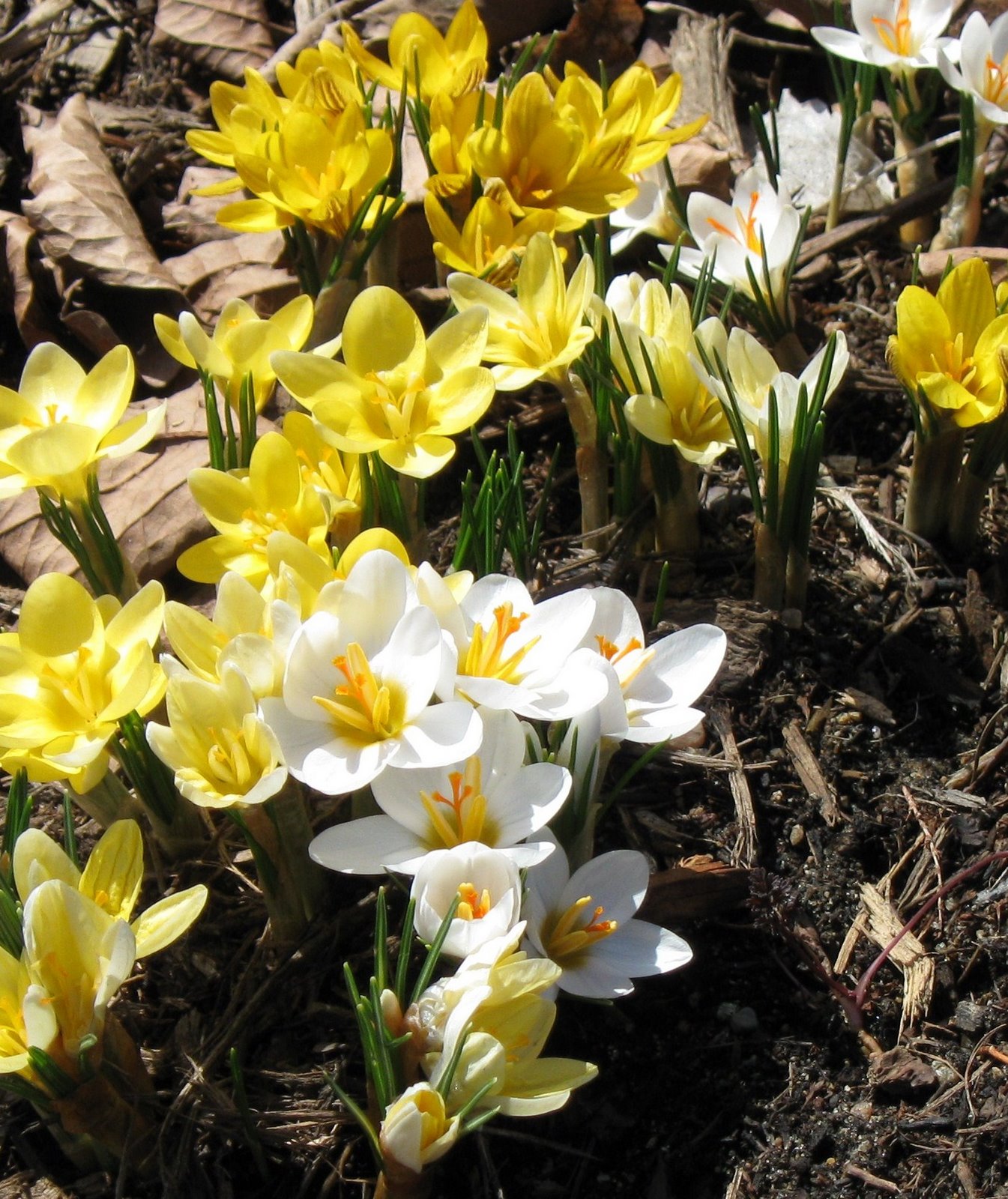

The most important thing is that the part of the garden where the flower bulbs are to be planted must not become too wet during the winter.  Water that remains in puddles several days after rain will absolutely ruin bulbs.  After all, they originate from dry areas in Russia, Turkey, Iran, and the high plains of Central Asia. 


Crocus, Snow Drops, and Scilla brighten a boring lawn in spring and naturalize easily.  However, mowing your lawn after bloom should wait at least six weeks.


Early spring flowers can bring the color and warmth of spring to your garden weeks ahead of the official springtime - a joyful garden sight!  So, don't forget to plant lots of bulbs NOW.


More Information:

VIDEO

Amazing Spring Bulbs That Beautify Your Garden

https://www.youtube.com/watch?v=6TP3P4cs0Tc


Top Performing Springs Bulbs that Naturalize

https://www.gardenia.net/guide/12-top-performing-spring-bulbs-that-come-back-year-after-year 


Frequent Asked Bulb Questions

https://www.flowerbulbs.com/678/faqs


.

<><><><><>

.


Sunday, April 12, 2020


Why Are My Daffodils or Tulips Not Blooming?


A Checklist of Causes:

Are you feeding with high-nitrogen fertilizer? The first number in the N-P-K ratio should be low; high N=no flowers, so bulb fertilizers aren’t high N?  Use instead one, low in nitrogen with these numbers:  3-6-6 or: 5-10-10.

Did you neglect to feed for more than a year or two? Feed bulbs when they begin active growth - when the green shoots are emerging.  Use an all-natural organic fertilizer intended for bulbs.  Apply according to label directions.

Did you cut foliage back too soon last year?  At least 6 weeks of “ripening” time is needed, with their foliage growing and intact.  In order to hide these yellow leaves, plant the bulbs behind large perennials or shrubs.  They will grow up or bloom at a time after the Daffodils are finished blooming.


Is the area very dry?  Bulbs need ample moisture when they are growing actively. On the other hand, a soggy area is harmful to them.

Is the area filled with tree roots, or with other competing plants who grab all the nutrients and moisture? Areas under evergreens can be inhospitable, for instance (ad well as too shady).

Dividing may be called for - or transplanting to another, better-suited area.

Were the bulbs recently planted or recently transplanted? Both can set back the bulbs for a time.

With daffodils - and bulbs in general - there are some additional triggers of diminished bloom, says the American Daffodil Society.  Read their full list of possible causes:
https://daffodilusa.org/growing-daffodils/non-blooming-daffodils/


What About Tulips?
They need similar care: In the spring, when leaves emerge, feed your tulips the same bulb food or bone meal which is low in nitrogen, the same you use for Daffodils: 5-10-10. Water well. Deadhead tulips as soon as they go by, but do not remove the leaves! Allow the leaves to remain on the plants for about 6 weeks after flowering.

.


Sunday, October 14, 2018


Spring Bulbs to Plant This Fall


Plant these classic bulbs in autumn 
for a glorious flower show next spring.


While it is still early fall and warm outside, the garden centers and nurseries are already fully stocked with spring bulbs for a marvelous, colorful spring garden.


Planting bulbs this fall will reward you with a sea of flowers next spring. While your garden is cold and dreary, the bulbs will be forming roots and preparing to bloom when the weather warms up again.  Popular varieties sell out fast, so buy or order your favorites ahead of time.


If You Have Already Spring Bulbs in Your Garden:
See how you can divide your bulbs and plant them - and also plant new spring bulbs:  https://www.youtube.com/watch?v=sd9cBEx2SC0


Thursday, November 26, 2015


Delightful Gardens - Even in the Midst of Winter


.
Winter doesn’t need to be a boring time in the garden. Changing seasons gives you a chance to appreciate the details in your garden landscape that you often miss once the leaves are out.
A few winter stars will take center stage and look best against snow and blue skies:
.


.

Start with one or several blue-silver Colorado Spruce and, trees with colourful or tactile bark: Paperbark Maple, Paper Birch, colored-twig Dogwoods, a Crab Apple or Strawberry Tree will act as an anchor for the rest of the planting.

Mid-level shrubs that are blooming in Winter such as Witch Hazel or shrubs with berries: Winter Berries or interesting evergreen leaves such as Boxwood, Ilex / Holly or Bay Laurel can be a fantastic underplanting.

Low-growing ground cover such as Snowdrops, Lenten Rose, Crocus and Winter Aconite or foliage such as Bergenia Cordifolia should be planted in generous numbers, anywhere from fifteen to thirty young plants at least to make an impact. The same is true for other plants and shrubs: as more are planted from one type as greater the visual epiphany.
.


.
Prepare Your Garden for Winter and Spring


  • Don’t cut down late fall blooms, especially not Sedum Autumn Joy or ornamental grasses. They are show pieces in frost and snow.
  • In areas where it snows all winter, all the available water can freeze, which makes finding drinking water a challenge for birds. Ensure regular visits from a variety of birds by using a bird bath with a warmer, or even a simple heated dog bowl to provide a steady source of water.
  • Plant lots and lots of bulbs, fifty to ninety of each for DaffodilsTulipsAllium etc. 


.

Have a look at winter garden images on Houzz.

And if you live in the UK, don’t miss to visit these gardens in Winter, recommended from The Guardian:

Cambridge University Botanic Garden
A south-facing valley makes the most of the winter light.

Sir Harold Hillier Gardens, Romsey, Kent
Features more than 650 plants that shine in winter.

Wakehurst Place, West Sussex
Beautiful winter beds and a host of witch hazels and daphne.

Bodnant, Conwy, Wales
A winter garden that opened in 2012 is already captivating visitors.


Tuesday, April 13, 2010


Early Blooms


Provident gardeners are now rewarded with early blooms - even earlier than usual this spring.
If you planted bulbs last fall you are enjoying now a cheery, colorful garden. Nothing says spring more than waves of yellow and blue flowers, seen in your garden everywhere. Best of all: many of these spring bulbs such as Scilla, Snow Drops and Daffodils naturalize and will bring more color into your garden in following years.


Blooming Parks
If you live in the Ottawa area visit Maple Lawn Garden on Richmond Road or Springfield Road in Rockcliffe (corner Mariposa) to find spectacular seas of blue Scilla.

Daffodils at Rockcliffe Park and the Rockeries
The pavilion and surrounding area has turned into a popular location for outdoor weddings. The Rockcliffe Rockeries has literally hundreds of thousands of Daffodil bulbs. The best time to view this display is now in April or early May, when flowering trees provide a burst of spring colour that complements the Daffodils.
Location: Rockcliffe Parkway, between Princess Avenue and Acacia Avenue, Ottawa


Fall Planting:
Mark your calendar for late August bulb purchasing and try to find bulb varieties of early and late bloomers and several heights. Plant them generously in wide groups. These bulbs are hardy to zone 3 and 4:

Galanthus (Snowdrop)
Hyacinthus (Hyacinth)
Muscari (Grape Hyacinth)
Narcissus (Daffodil)
Tulipa (Tulip)
Crocus (Crocus)
Scilla (Bluebell)

- Plant the bulbs in early October in well-prepared soil. Planting depth varies by the type of bulb (8cm deep for Crocus, 12 deep for Daffodils and Hyacinths, 15cm deep for Tulips).

- Cover with chicken wire to deter squirrels from eating your precious bulbs, water well and add another layer of soil or mulch.

- Fertilize plants immediately after their flowering ends generously with compost soil.

- Let th bulbs go dormant naturally. Important: Don't remove foliage after bloom.

- Plant groups of Achillea, Poppies, Euphorbia, Heliopsis, Lambs Ear, Purple Cone Flowers or blooming herbs between the bulb areas. They too don't to be watered and will cover the drying foliage of the spring bulbs

- Allow the bulbs to dry out (just quit watering) after the foliage begins to turn yellow. Most spring bulbs prefer dry soil during summer.

- Every three years: dig, divide and replant the bulbs when crowded.


My favorite early bloomer: Periwinkle
In shady gardens Periwinkle will strive, rewarding you with lots of dark green ground cover and blue flowers short after the last snow melted. They are not fussy with soil and spread themselves over the years.
Much nicer than boring brown lawn in spring - and less work!

Sunday, May 3, 2009


Tulip Festival Ottawa


If you like TULIPS: mark your calendars for May 1 - 18, and plan for a trip to the National Capital of Canada.
The Tulip Festival has grown into the largest tulip festival in the world.
It began from a gift of 100,000 tulips given to Canada five decades ago by the Netherlands' royal family. This gesture showed their appreciation for the safe haven they were granted in Ottawa during the Second World War, and for the role Canadian soldiers played in the liberation of the Netherlands. Since then, the tulips have become an important symbol of peace, international friendship and the beauty of spring in Canada.
http://www.tulipfestival.ca/en/galleryphotos/gallery_mhp_cs.html


Getting to Ottawa

To make it easier (and a little cheaper), contact ViaRail and ask for their special Tulip Rate to Ottawa. There are several bus routes in Ottawa that can be used to reach the park sites. The bus ($3, or buy a DayPass $7 - exact fare, no change) is easy, planet-friendly, and saves you the hassle of looking for parking!
http://www.tulipfestival.ca/en/tulip_route_map.html


And these are the most popular festival places:

International Pavilion - Lansdowne Park Bank Street, closed to the Rideau Canal

FREE ADMISSION !!!
The International Pavilion is home to 24 participating embassies and local community groups. Enjoy a variety of international entertainment on the Friendship Stage, taste exquisite international cuisine, dip into history, explore traditions, shop for your favorite souvenirs and discover tourism hot spots.
These countries are presented or give several performances: Argentina, Brazil, China, Costa Rica, Ecuador, Germany, Greece, Guatemala, India, Indonesia, Israel, Korea, Kuwait, Mexico, Netherlands, Peru, Philippines, Portugal, Romania, Russia, South Africa, Thailand, Turkey and Vietnam.


Commissioner’s Park - Carling Avenue and Preston Street
FREE ADMISSION !!!
An estimated 300,000 tulips shape and illuminate one of the National Capital’s most prestigious parks in the city. Throughout the Festival, street performers will grace the Park’s grounds, providing a musical and entertaining ambiance. There will also be local painters amongst the flowerbeds. The Tulip Boutique is back, as well as Music in the Tulips, a community and school oriented music program. School bands will serenade visitors as they stroll through the Park. Performances are given daily at 11:30 a.m., 1:00 p.m. and 2:30 p.m.


The National Capital Commission (NCC) will provide a Tulip Legacy Exhibit, which recounts the history of the Dutch Royal family’s refuge in Canada during the Second World War and the contribution of Canadian troops to the liberation of the Netherlands in 1944-45.
While touring Commissioner’s Park, visitors can pick-up a free copy of the “Experience the Beauty! The National Capital Commission’s Tulip Beds” brochure, which provides information on the tulip legacy story, the different varieties of tulips planted in the 27 floral beds, and the location of designated photo sites in some of the Park’s most beautiful tulip displays of flowerbeds.

The Canadian Tulip Festival is also "greening" its practices: Banning Styrofoam, and allowing only compostable, degradable, or 100% recyclable dishes and cutlery on site, providing bike rental and bike parking to encourage bicycling.