Tuesday, October 16, 2018


Where to Purchase Cannabis in Canada

See how happy Canadians are:


On October 17, 2018, recreational Cannabis is legal in all provinces of Canada.  Which province has the most stores and how well are they prepared for the countdown?

Canadian Provinces
While traveling through the province of New Brunswick in the Maritimes I saw lots of new stores with the "Cannabis NB" sign.  All 20 locations are expected are stocked and staffed across New Brunswick, having already shown off one of the government’s completed cannabis stores in mid-June.

Nova Scotia: The government-owned Nova Scotia Liquor (NSLC) Commission will be the physical cannabis retailer as of legalization day. Eleven NSLC locations across the province will offer about 150 different cannabis products in separate stores within existing alcohol retailers.

Prince Edward Island: Canada’s smallest province will have four government-owned cannabis stores. Locations in Charlottetown, Summerside, Montague and the West Prince region.

New Foundland & Labrador: Canada’s easternmost province will have 24 private retail cannabis locations.  Some smaller businesses made the cut – Tobin’s Convenience in Labrador City, for example – but the majority will be owned and operated by large corporations, such as Loblaws.

Quebec: The plan is to open 20 storefronts “gradually” once legalization takes effect. But so far, the SQDC has only announced 14 locations, with half of them in either Montreal or Quebec City.

Ontario: The OCS (Ontario Cannabis Store) will launch an online-only format as of Oct. 17 - while private businesses will handle all bricks-and-mortar cannabis operations - locations or how many will be allowed to open have not yet been released.

Manitoba: Around 30 cannabis stores stocked and staffed across Manitoba in time for legalization.  The overall goal is to have 90% of provincial residents living within a 30-minute drive of a cannabis store by the end of the decade.

Saskatchewan: 51 draw-winning cannabis retailers (out of 1,500 applications) have been given the approval to open storefronts as of Oct. 17.

Alberta: The AGLCC estimates at least 150 stores will be licensed, stocked and staff by mid-October. More cannabis stores will be in Alberta than in the rest of Canada combined.

British Columbia: An official plan calls for a mix of both privately-owned stores and government-run locations under the “BC Cannabis Stores” banner, but neither appears to have made much progress. Well, I guess there are so many previously opened illegal cannabis operations, so BC inhabitants might not be too excited about the legalization : )
Somewhat similar to Quebec.

Northern Territories: Not even a dozen stores, some government run, some private are in the Yukon and NWT to cater to patrons. Nunavut will be delivered by online stores.
.

College Education in Cannabis Growing Operations
Niagara's College's new cannabis program: On the first day of school, the prof had not only students huddled around him, but also reporters and cameras.
These "pot school" offers intensive hands-on training in growing pot with classes which focus on topics like plant nutrition, climate control, pest control, and plant selection. There are also courses about the regulations governing cannabis in Canada.  The program ends with a field placement for students at a cannabis producer in the region.

"Pot School" in Niagara 
"Over 300 people applied for 24 spots in Niagara College's program, making entry to the pot school very competitive. The two dozen students in the first cannabis class range in age from 21 to 54 and several of them left full-time jobs for the opportunity" reports CBC News.

Even a 
Ph.D. in pot Production...
“The University of Guelph in Ontario has already produced a student believed to have completed North America's first Ph.D. in pot production.”

Read all about Cannabis in Canada on this government website.


.
However, don't consume pot before and while driving as shown in this funny video:
https://www.youtube.com/watch?v=2PLC_cBJwk4


.
<><><><><>


.


Monday, October 15, 2018


Most Colorful Foliage: Caladiums and Coleus


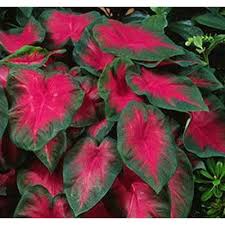
Caladiums
These tropical shade dwellers are a stunning choice for the darker corners of your garden landscape.  Caladiums also make excellent container plants.  Most varieties grow between 18 and 24 inches tall, but dwarf forms are also available.  Because their large leaves are easily damaged by high wind, plant them in a protected location.


.
Caladium Growing 
Caladiums are tropical bulbs that need to be dug and stored after frost blackens their foliage in the fall, just as you would do with Gladiolas or ….. In warm, frost-free regions they can remain in the garden. Indoors, use caladiums as a cheerful houseplant. Just give it medium light and warm temperatures.  Water caladiums whenever the surface of the soil begins to dry. They prefer moist, but not wet soil.  Pinching is for many annual and tender perennial plants—such as coleus—an encouragement to branching and to full, bushy growth.


.
Winter Care
Northern gardeners will need to store caladiums over the winter. Dig the tubers up after the first light frost. Then, brush off the soil and plunge the roots into a box of peat moss and place in a cool, dark, warm location for the winter.  Occasionally sprinkle the bulbs with just a splash of water to keep them hydrated in storage. Replant in pots in the spring and set the plants outside after frost danger has passed.


.
Coleus: Another Colorful Plant for Shade Gardens
Distinctive leaf shapes, intricate patterns, and rich colors rival some of the showiest foliage plants.  Coleus is grown for its ornate foliage in eye-catching colors including white, yellow, red, pink, purple, maroon, copper, and a wide range of greens. Coleus makes an attractive addition indoors or outdoors.


.
Cut It Back
When the weather begins to drop, especially at night, cutting back the coleus flowers will help the plant conserve a lot of energy and food. You do not have to worry about hurting the plant too much if you cut it back too far.  Coleus is a very hardy plant and can handle the cutting. In fact, it will come back even bushier and more colorful than before. intense summer sun which will scorch the leaves.
.


Keep it Moist
Coleus leaves will wilt and may fall off if the soil is too dry. You'll have a much healthier-looking plant if you keep the soil moist at all times. Use a pot with drainage holes and water thoroughly.  Need a container? Check out the stylish self-watering pots available now.  It's just the thing to keep your coleus from wilting this summer.  Dropped leaves indoors?  Low light, dry soil or cold air can cause leaves to drop.  Don't worry - this vigorous plant will replace them when it gets what it wants.
Transplanting indoors will save your plants from freezing.  Carefully dig around the plant and lift out of the soil. Transplant it into a pot with soil that is already moist.  Coleus make a lovely, colorful Thanksgiving dinner table decoration!


.
Propagation Coleus’ is Easy: 
Cut several twigs, stripe most of the leaves off and place them in a water glass.  Exchange the water once a week.  After a couple of days, you will see the first tiny roots appear.  Once the roots are growing sturdy, plant each of the new plants in a small flower pot and place them overwinter on a window sill. 
.

Read More About Coleus and Caladiums:
https://www.wikihow.com/Grow-Coleus
https://www.finegardening.com/article/pinching-coleus
http://www.guide-to-houseplants.com/coleus-plant.html

.
<><><><><>


Sunday, October 14, 2018


Spring Bulbs to Plant This Fall


Plant these classic bulbs in autumn 
for a glorious flower show next spring.


While it is still early fall and warm outside, the garden centers and nurseries are already fully stocked with spring bulbs for a marvelous, colorful spring garden.


Planting bulbs this fall will reward you with a sea of flowers next spring. While your garden is cold and dreary, the bulbs will be forming roots and preparing to bloom when the weather warms up again.  Popular varieties sell out fast, so buy or order your favorites ahead of time.


If You Have Already Spring Bulbs in Your Garden:
See how you can divide your bulbs and plant them - and also plant new spring bulbs:  https://www.youtube.com/watch?v=sd9cBEx2SC0


Friday, September 21, 2018


Seaweed to Improve Your Garden Soil

.
.


If you are living close to the Atlantic, the Gulf or Pacific coast you are lucky as seaweed for your garden is easy to gather.  Gardeners inland have to buy the gardening gold.

Seaweed contains about 60 trace elements, as well as fungal and disease preventatives.  Using seaweed for compost improves soil consistency and increases water retention in sandy or grainy soils.


Amend Your Garden Soil and Compost
Water the seaweed well to remove the salt and work it into the soil or add it to your compost heap.  When using seaweed as compost, it can be used dry or wet.  As a soil amendment, seaweed even deters pests both large and small.  Instead of buying mulch you can even use seaweed to top up your flower beds. It will save water, keeps the soil moist at ground level, eliminates the need to weed and enriches the garden soil.
.

Get More Tips Here:
How to Use Seaweed in the Garden - YouTube Video
https://www.youtube.com/watch?v=0gFUQ2w7lnI

How to Use Seaweed to Mulch Your Garden
https://learn.eartheasy.com/articles/how-to-use-seaweed-to-mulch-your-garden/

Seaweed as Composting Ingredient
https://www.gardeningknowhow.com/composting/ingredients/composting-seaweed.htm


<><><><><>


Sunday, September 16, 2018


How to Propagate Hydrangeas from Cuttings


Select a Hydrangea twig for cutting that should be at least 12 centimeters/6 inches long, has no flower and is new growth.  Take a sharp pair of shears and cut the stem off just below a leaf node.  A leaf node is where a set of leaves is growing. 

Strip all but the topmost set of leaves from the cutting. The cutting should have only two leaves left.  Dip the end of the cutting in rooting hormone.  While rooting hormone which you can purchase at nurseries and garden centers, will increase the chances of successfully propagating hydrangeas, you can still propagate hydrangea shrubs without rooting hormones. 

Find a wide, clear plastic bottle or empty peanuts container that is higher than the twig.  Fill it with planting soil or peat moss, and add water to moisten the soil.  Stick the cutting into the damp potting soil.  It should not touch the plastic device, at least not the leaves.
Close the lid and poke a half dozen holes in it, or if you don't have the lid for the device, place plastic over the top opening and also poke holes in the plastic cover.

Place the pot in a sheltered location out of direct sunlight.  Check the hydrangea cutting every few days to make sure the soil is still damp. In about two to four weeks, the cutting will be rooted.

This method for propagating works for pretty much of all shrubs, only the times to take the cuttings varies between the types and the locations/hardiness zones.  Just google it in typing the plant and the word propagation from cuttings and your planting area.

Have fun with creating new shrubs - almost for free!


<><><><><>


.

Friday, August 24, 2018


Discard Toxic Garden Poisons - Round Up


.

ROUND-UP and WEEDS B' GONE kills not only plants and pets, makes people sick and poisons our water… Scientific tests during the last 20 years show the evidence of cancer risk. However, Monsanto 'bullied scientists' and hid weedkiller cancer risk, lawyers tells the court.

.
Why Monsanto is Hiding Round-Up Weedkiller Cancer Risk?
Monsanto has long worked to “bully scientists” and suppress evidence of the cancer risks of its popular weedkiller, a lawyer argued on Monday in a landmark lawsuit against the global chemical corporation.

Global Glyphosate Study Pilot Phase Shows Adverse Health Effects at ‘Safe’ Doses
The results reveal that glyphosate-based herbicides (GBHs) were able to alter certain important biological parameters, mainly relating to sexual development, genotoxicity and the alteration of the intestinal microbiome -  with direct impact on our health!
The pilot study involved the participation of multiple Institutions and Universities in Europe and the U.S.

“Monsanto has specifically gone out of its way to bully ... and to fight independent researchers,” said the attorney Brent Wisner, who presented internal Monsanto emails that he said showed how the agrochemical company rejected critical research and expert warnings over the years while pursuing and helping to write favorable analyses of their products. “They fought science.”

Attorny Wisner, who spoke inside a crowded San Francisco courtroom, is representing DeWayne Johnson, known also as Lee, a California man whose cancer has spread through his body. The father of three and former school groundskeeper, who doctors say may have just months to live, is the first person to take Monsanto to trial over allegations that the chemical sold under the Roundup brand is linked to cancer. Thousands have made similar legal claims across the US.

Want to kill your cat or dog or make yourself, and your whole family sick?  Look no further than your “Weed Man” or any other “landscaping” contractor or to yourself...  I am talking here not even about the glyphosate-drenched soil and water that we leave for our children and grandchildren…

Please, Wake Up Folks!  
Just to remove a couple of Dandelions (which are edible, for example, to make a healthy salad or to roast the roots) some people pull out their “Weeds b’ Gone” or RoundUp. Conveniance kills!
.

Read More:
Glyphosate: Unsafe On Any Plate:
https://s3.amazonaws.com/media.fooddemocracynow.org/images/FDN_Glyphosate_FoodTesting_Report_p2016.pdf

Carcinogenicity of tetrachlorvinphos, parathion, malathion, diazinon, and glyphosate:
http://www.thelancet.com/journals/lanonc/article/PIIS1470-2045%2815%2970134-8/abstract

Glyphosate and Its Degradation Product AMPA Occur Frequently and Widely in U.S. Soils, Surface Water, Groundwater, and Precipitation:
http://onlinelibrary.wiley.com/doi/10.1111/jawr.12159/abstract;jsessionid=627881F2E3FB2D580B24CCF6F2B2A33D.f03t02

Glyphosate persistence in seawater
http://www.sciencedirect.com/science/article/pii/S0025326X14000228

UCSF Presentation: Bio-monitoring of glyphosate across the United States in urine and tap water
http://detoxproject.org/wp-content/uploads/2016/05/APAMT-Poster-Gerona.ppt

.

Saturday, August 11, 2018


Good News - Monsanto to pay $289 million


Jury orders Monsanto to pay $289 million to a man who says their Roundup product gave him cancer

US news  August 10, 2018
In a potentially precedent-setting case, agrochemical giant Monsanto was ordered to pay damages to Dewayne "Lee" Johnson, a former groundskeeper whose repeated use of the Roundup weed killer contributed to his terminal cancer diagnosis. Hundreds of other similar cases are pending.

Pesticides: Surefire Recipe to Harm

Why kill your kitten with pesticides?


Want to kill your cat or dog or make yourself, and your whole family sick?  Look no further than your “Weed Man” or any other “landscaping” contractor.  I am talking here not even about the glyphosate-drenched soil and water that we leave for our children and grandchildren… 

Wake Up, Folks!  

Just to remove a couple of Dandelions 
(which are edible, e.g. to make a 
healthy salad or to roast the roots) 
some people pull out their “Weeds b’ Gone”. 
.

Why kill your dog with pesticides?


.
Adverse Health Effects
Cancer, Alzheimer, Birth Defects...
why would anyone use Glyphosate - aka WeedsBGone?
Global Glyphosate Study Pilot Phase Shows Adverse Health Effects at ‘Safe’ Doses
The results reveal that glyphosate-based herbicides (GBHs) were able to alter certain important biological parameters, mainly relating to sexual development, genotoxicity and the alteration of the intestinal microbiome -  with direct impact on our health!

Avoid these Common Sources of Glyphosate:
  • Avoid the primary GMO foods including all soy, corn, canola.
  • Avoid all non-organic cereals and grains, which are harvested with glyphosate, including wheat, barley, buckwheat, millet, rice, oats, rye, sorghum, wild rice, and popcorn

.
Scary Outlook
The pilot study involved the participation of multiple Institutions and Universities in Europe and the U.S.  https://glyphosatestudy.org/faqs-glyphosate/ 


Carcinogenicity of tetrachlorvinphos, parathion, malathion, diazinon, and glyphosate

Glyphosate and Its Degradation Product AMPA Occur Frequently and Widely in U.S. Soils, Surface Water, Groundwater, and Precipitation

Glyphosate persistence in seawater

UCSF Presentation:
Bio-monitoring of glyphosate across the United States in urine and tap water http://detoxproject.org/wp-content/uploads/2016/05/APAMT-Poster-Gerona.ppt

.
These are just a few of hundreds of scientific studies...

Monday, July 9, 2018


Coffee Grounds for Your Garden


I love to go to Starbucks, armed with two large pales and let them fill with coffee grounds. Some of the branches even have pre-packed bags with the brown garden wonder. I don't want to let them do extra work, so I insist to leave the coffee filter paper in the grounds. They are so busy that I don't want to make them extra work. I can easily pick the filters out myself at home.  It doesn't take me even a minute to do this.  During my ride home and for the next couple of days I have a lovely coffee smell in my car.
.
Don't Discard Your Coffee Grounds 
Coffee grounds are strewn every morning in millions of compost bins (in the best case), but mostly in garbage cans.  Did you know?  They still contain a lot of valuable ingredients: potassium, nitrogen, phosphorus, tannic acid and antioxidants.  The very same nutrients that are also found in expensive fertilizer products. In the garden, coffee grounds can be used in many ways.  A basic prerequisite for all applications is that it is always well cooled and dry, as moist coffee grounds easily mould.  Place the coffee grounds in an open, wide container and allow it to air dry.

Coffee Grounds Are Perfect Around Hydrangeas, Azaleas, and Evergreens
Cucumber, tomatoes and zucchini love caffeine too.  The phosphorus, nitrogen, and potassium in the coffee ground are supporting pretty much any other plant as well - keep it only away from young sprouts.


  • The Nitrogen in the coffee grounds supports healthy growth and reproduction. While native plants are better adapted to their surroundings and oftentimes less affected by nitrogen deficiency, in plants such as vegetable crops, supplemental nitrogen may be required.
  • Phosphorus plays a role in photosynthesis, root growth, respiration, energy storage and transfer, cell division, cell enlargement etc. 
  • Potassium is one of three primary nutrients required by plants  

.
Coffee grounds protect even somewhat against snails
Unlike vegetables, most snails do not like caffeine. The coffee grounds are therefore wonderful as a barrier, which can be spread around the salad.  However, this does not apply to all types of slugs.  But it’s definitely worth a try.
.
Coffee grounds scare away wasps
This measure against wasps should only be used outside: If the coffee grounds have dried well, light them on a fireproof base and let them smoke a bit. The smell reminds only remotely of coffee, but the wasps then avoid the garden table.
.
Coffee grounds stop cats
No one likes the legacy of cats in the sandpit or basement: What works for most slugs is also true for cats.  Just sprinkle around the sandbox and the cats make a turn around it.
.
Coffee grounds improve compost, potting soil and irrigation water
What is good for the plants also helps the compost: coffee grounds on the compost is the best reason why you should not simply dispose of coffee grounds in the trash.
In compost, coffee accelerates rotting, and earthworms like caffeine kick. This also means that leached potting soil can be revived quickly. Mix the potting soil in equal parts with compost and fold in the coffee grounds in small quantities.  Too much coffee in the soil can easily form mould.  For very basic soils and calcareous water, one, two spoonfuls of coffee grounds in the irrigation water can work wonders. It neutralizes the irrigation water and fertilizes the soil.

Coffee is a favorite drink.  What’s leftover is plenty of coffee grounds, which ends up in the garbage quickly.  Coffee grounds are too good to throw away - same for tea leaves.

https://academic.oup.com/jxb/article/56/417/1943/484407
https://www.pthorticulture.com/en/training-center/role-of-potassium-in-plant-culture/
https://www.gardeningknowhow.com/garden-how-to/soil-fertilizers/understanding-nitrogen-requirements-for-plants.htm

.


Monday, June 18, 2018


Tips for Your Summer Garden:


Your garden, like all gardens, small or large, requires some TLC to keep them looking fresh year-round.  Make it a habit, to walk your garden several times a week, cut some flowers, pull a weed here and there and harvest the rhubarb, berries or tomatoes.
  • Don’t forget to water the soil (not over the flowers!) when it hasn’t rained significantly for two days.  
  • Cut all the faded flowers to avoid self-seeding on places you don’t want them and also to clean up your flowers beds.
  • Prune flowering shrubs immediately after the blooms get ugly
  • Mulch if you haven’t already, it keeps the soil longer moist (water the soil well  before applying the mulch!)
  • Dig out weeds, such as Dandelions and Plantains - with their roots
  • Give your houseplants a summer vacation outdoors (only in full shade!)
  • Side dress flower beds with compost or manure or feed with fish emulsion - or if you don’t have any compost, add a little bit Miracle Grow to your potted plants/annuals

.
Composters Beware! 
A herbicide sold under the trade names of ForeFront and MileStone has ruined hundreds of gardens in Great Britain, and it can happen in North America, too.  Used mostly to control perennial weeds in pastures, the herbicide can survive being digested by horses and then being piled up for months as compost.  Especially sensitive plants such as lettuce, beans, and tomatoes refuse to grow and wither when planted in soil that contains very small amounts of this residue.  These herbicides do not injure grasses, so they are often used in fields where manure-producing animals graze.

Registered with the EPA in 2005, the herbicides that survived commercial composting and went on to contaminate gardens in Washington eight years ago. These products are widely available at farm supply stores across the country, anyone can buy them.

Be selective if you decided to import manure for composting projects.  Manure from animals that have fed in pastures that have been treated with these pesticides should be considered unsuitable for garden use!
.

Watering Your Garden
Never water your yard in the heat of the day.  First, you waste a lot of water due to evaporation and second it CAN burn your grass or plant leaves.  Best time to water is from 4am till no later than about 7-8 am.

You are doing fine to water two or three times a week, soaking the soil thoroughly. Those people who water every single day and over-water are creating lawns that develop short shallow roots and are susceptible to dying in the winter if there is a bad freeze. In summer their grass requires MORE water as the roots are not digging down deep looking for a water source either nor are they able to retain the moisture being that close to the surface.  The deeper the roots the better your grass will survive a long hot and dry summer and a freezing cold winter.

Don't forget to smell the roses!  

.
<><><><><>


Saturday, May 26, 2018


Hibiscus Plants - and How to Care for


Hibiscus are deciduous shrubs with dark green leaves; the plants can grow to 15 feet tall in frost-free areas.  Flowers may be up to 6 inches in diameter, with colors ranging from yellow to peach to red.  

Don't panic, yellow leaves on hibiscus are normal. They look like something is wrong, but they are usually just a warning, a call for help, and not a sign of impending death.

Hibiscus leaves turn yellow and drop from the plant due to stress. The stress can be of any type and be figuring out what kind of stress is the challenge for the gardener.  We cannot tell you exactly what is wrong with the plant without knowing a lot more than you are likely to be able to tell us.  YOU have to think about it, and when you are pretty sure you have determined the cause, then you can take action to relieve the stress on your hibiscus.  This article is intended to help you figure it out what is wrong.

Stresses that can cause yellow leaves on hibiscus include:

Not Enough Water or Too Much Water
In warm conditions, hibiscus needs a lot of water, even every day or more than once a day if it's really hot or windy. Self-watering pots can be an excellent way to avoid this type of stress. bA watering system controlled by a timer is another way for gardens with large numbers of plants.
Yes, hibiscus can also be given too much water when the weather is cool or overcast.  Hibiscus like to be moist but not sopping wet and if they don't need the water due to cold or dark conditions then too much will stress the root system.
.
Too Hot or Too Cold
This is related to water but please take note on super hot summer days that hibiscus will need lots of water to keep all the big lush leaves well supplied.  If they don't get enough they react by dropping leaves (turning yellow first) so that they don't need as much water.
Hibiscus are tropical plants that thrive in the same temperatures that people like, 65-85°F (18-29°C).  They will survive, but they will not like temperatures down to freezing and up to 110°F (38°C).  If they get too cold or are placed in a cold drafty window, they can react with yellow leaves.
.
Too Much Direct Sunlight or Too Little Sunlight
Hibiscus like sunlight but just as most people like moderate amounts of it so do hibiscus.  Too much sun places stress on hibiscus that is not used to it and they can react with yellow leaves or big white spots on leaves. The white spots are similar to sunburn on us.  They won't kill the plant but will cause it to shed leaves.

Light is the source of life for plants such as hibiscus.  If they do not get enough to support all the big lush leaves they will drop some of their leaves (which turn yellow first) so that they don't need to support so many. However, that means that there is less green chlorophyll left to support the needs of the rest of the plant so it may continue to decline until there are only a few leaves left on the plant.
.
Insects, Particularly Spider Mites
Spider mites on houseplants and outdoor plants is a common problem.  It is important to use a spider mite treatment as soon as possible to keep the plant looking its best.  Spider mites produce the worst effects on stressed plants.  Keeping your hibiscus plant well-watered will help it withstand mite-induced damage.  Because mites prefer dry conditions, use an overhead spray when watering your hibiscus, wetting the leaves to raise humidity.  Read more how to treat spider mite damage:
https://www.gardeningknowhow.com/plant-problems/pests/insects/spider-mite-treatment.htm
.
Hibiscus can be planted singly or grown as a hedge plant; they can also be pruned into a single-stemmed small tree.  The flowers are attractive to butterflies and hummingbirds.

.

Wednesday, May 2, 2018


3 Great Shrubs Instead of a Fence


Most fences are not only ugly but almost an eyesore.  Not to speak about their ridiculously high prices.  Even if you are living in an area with frequent deer "visits" you might not need a fence.  There are three lovely shrubs - with three different leaf colors that are inexpensive, attractive and deterrents to unwanted human or animal visitors. My suggestion is to plant alternating Rosa Rugosa, Barberry, and Seabuckthorn. 
.


.
Rosa Rugosa:
Also called Beach Rose, it is best grown in moist, slightly acidic, well-drained garden loam in full sun to part shade.  But this rose is very hardy, prickly, and also very adaptable to somewhat poor soils, including sandy, clay or gravelly ones.  I once planted the Rosa Rugosa into the extremely poor soil, almost all clay, but it thrived wonderfully for many years - and it still does - as I can see when driving by my former garden.

They can be propagated through the rose hips, just plug them from the main plant and lay the hips half an inch deep into the soil where you want it to grow.  It might take two years until the first booms show.  But hey!  You got this new plant for free.

Best flowering and disease resistance generally occur in full sun.
.


.
Berberis - Barberry
Barberry was introduced from Japan around 1875. It is commonly planted for ornamental reasons as well as against wildlife and erosion.  Berberis, commonly known as barberry, is a large genus of deciduous and evergreen shrubs.  They are appreciated for their bright, colorful foliage and graceful arching stems.  The most beautiful color shows the variety “Rose Glow”. It has a stunning dark pink appearance.  This attractive, but thorny bush keeps everything and anyone from your property.
.


.
Seabuckthorn
The flowers are tiny, the Seabuck"thorns" (hence the name) are a very good deterrent for any invaders, human or otherwise.  Seabuckthorn hedges, especially in fall and winter, are most showy with big clusters of orange berries.  I just like it as a beautiful fence, for an occasional winter snack, and as a treat for birds.
Read more about the fantastic health benefits which these berries provide:

http://garden-dream.blogspot.ca/2010/04/i-get-lot-of-compliments-for-my.html

.
Whatever you do with any of these "plant fences" - such as planting or pruning - use very sturdy gloves, they are not forgiving!  However, their sturdiness and easy or "no-maintenance" are great values on the outskirts of your garden.  And as a bonus, you will get so much attractive color in the garden - almost year-round. 
Happy Gardening!

.


Sunday, April 8, 2018


More than Honeybees

.


The mysterious decline of honeybees - the domesticized ones especially - is in the media for years.  Parasites, neurotoxic pesticides, industrial agriculture, and development have decimated honeybee stocks tremendously.  However, there are many other bees around to help pollinate crops and fruit trees - not only our well-known honey bees. 
.

Who Else Helps Pollinating?
Honey bees will only fly within a radius of 3 to 5 miles maximum to forage for food.  Many other pollinating species remain unsung heroes of the environment, gardens, and countryside.  Bumblebees, for example, are used to pollinate greenhouse tomatoes.
Some crops are solely pollinated by wild bees and other pollinators, and not by honey bees.  Besides honey bees, there are 3,999 other bee species living in North America alone, in the UK, perhaps it is one of the other 250 species of bees.

Wild bees, such as mason bees, blue orchard bees, solitary bees, red mason bees, stingless bees, horn-faced bees, blueberry bees etc. are sometimes even better suited to pollinate than honey bees.  Although they don't produce the "sweet stuff" that beekeepers are fond of.
.
Mason bees, for example, are ten times more effective than honey bees!  It only takes thirty mason bees to pollinate a standard apple tree - compared to three-hundred honey bees. 
.
.

.

You Don't Need to Become a Beekeeper
Domesticated honey bee colonies supplement the work of natural wild pollinators - not the other way around.  In a study of 41 different crop systems worldwide, honeybees only increased yield in 14 percent of the crops.  Who did all the pollination?  Native bees and other insects!  They are also early spring pollinators.  Wild, native bees barely ever sting - contrary to honey bees.
.

.
This is How You Can Help Wild Bees
No matter if you have only a balcony or small garden, if you planted fruit trees or berries on your acreage, or if you own large orchards: it's very easy to support pollinators. It's a very important process for our food chain.  No pollinating means no food!  Place one or several bee houses on the south side of your house, garage or garden shed building.  As larger the overhang on the roof is, as better. This way, woodpeckers (who have a 4inch long tong) are not able to reach into the breeding tubes.

.

This is one of the better bee houses as it has a roof overhang!

Avoid to hang it on a tree as their predators, such as ants, earwigs, and birds frequent the twigs. You can easily build your own house from a 4x4 piece of wood and two wood plates for the roof.  Drill holes of about 7 mm in diameter.  Instead of purchasing, turn pieces of toilet paper rolls (or colorful construction/handicraft paper) around a pen and place it tightly into the drilled holes.  Never buy a bee house without roof overhang!

The female bee will fill the tubes with eggs, pollen, and nectar for food for their young.  Every female is fertile and makes her own nest, and no worker bees for these species exist.  When the female bee runs out of eggs, she will die.

.


This beehouse is protected with chicken wire against birds and other predators

.
The Lifecycle of the Young Bees
The first three stages — egg, larva, and pupa — take up the majority of the bee’s life. The adult stage may last only a few days (for males) and a few weeks (for females).  Females typically nest in narrow gaps and naturally occurring tubular cavities, commonly this means hollow twigs.  They do not excavate their own nests.  The material used for the cell can be clay, mud, grit, or chewed plant tissue.  A female might inspect several potential nests before settling in.

Once a provision mass is complete, the bee backs into the hole and lays an egg on top of the mass.  Then, she creates a partition of "mud", which doubles as the back of the next cell.  The process continues until she has filled the cavity or tube.  Female eggs are laid in the back of the nest, and male eggs towards the front.  Once a bee has finished with a nest, she plugs the entrance to the tube and then may seek out another nest location.

Within weeks of hatching, the larva has probably consumed all of its food and begins spinning a cocoon around itself and enters the pupal stage. The adult pupal matures in the fall or winter, hibernating inside its insulation cocoon, even if the temperature drops below 0°C for months, they are well-adapted to cold winters.

When the bees emerge from their cocoons, the males exit first.  The males typically remain near the nests waiting for the females. When the females emerge, they mate with one or several males. The males soon die, and within a few days, the females begin to fill their nests.
.


.

How You Can Support the Bees
If you are a small backyard gardener and you don't want to go into pollinator breeding, then just hang up your bee houses.  Maybe change the location during the hottest summer weeks to the shade north side of your house.  Early next spring, vice versa: back onto the Southern walls.  You should only check if the tubes are still intact, and maybe have to replace one or the other.  That's all.  You have helped the native bee population to find safe nesting places and introduced the new ones to your garden. Congratulations!
.

Breeding of Native Wild Bees
Owning lots of berries plants, or fruit trees or even an Orchard?  Maybe even want to go into the breeding business in order to sell pollinators?  Then you need more bees!
  1. Hang up a dozen bee houses, and fill those with tubes in very early spring
  2. In late June, check if most of the tubes are "occupied" (mud is clocking the tubes)
  3. Take out the tubes, store them in a tin box with several tiny holes for air circulation
  4. Store the box in a pretty cool, dry and safe spot 
  5. In October, very carefully open the tubes to remove the cocoons
  6. Wash your cocoons in cool water, gently remove any dirt or mites 
  7. Let them dry, and store again in a tin box with several tiny holes for air circulation
  8. Store the box in an even cooler (ca. 0 degrees), dry, safe spot til early spring - and then start over again with #1 - starting the next season.
    .
Encourage these pollinators to visit your backyard, plant a variety of local native plants that vary in color, shape and blooming season.  Be sure to provide a clean source of water, mud, and safe nesting sites, and avoid any pesticides or insecticides.
.


.
The main threat to the native bees is habitat loss. As native vegetation is replaced by exotic garden plants, large expanses of lawn and roadways, bees lose all the resources they need to survive — and to pollinate.
.
More Resources About Native Bees:
https://www.buzzaboutbees.net/wild-bees.html
http://wildforbees.ca/
http://www.jrfarm.ca/mason-bees/
https://en.wikipedia.org/wiki/Mason_bee

.

.