Saturday, March 28, 2015


1,000+ Heirloom Seeds for Fruits, Flowers and Veggies

.
The New York Times wrote:
"Founded in 1852, Petaluma has a pretty downtown lined with Victorian-era iron-front buildings. It’s anchored by the glorious 1920s Sonoma County Bank building with huge arched windows and 30-foot hammered-metal ceilings, now home to the Petaluma Seed Bank and Baker Heirloom Seed Company."   
.


.

Petaluma, north of San Francisco is indeed a lovely town, and visiting the Seed Bank is a MUST for every gardener!  At least for those who do not want to grow and eat "Monsanto Products" - as everything the Heirloom Seed Bank offers is pure, natural, and non-GMO!  
.
If you are in the Bay area, Sonoma or Napa Valley, make yourself the pleasure to stock up the ingredients for healthy garden products, with flavor and taste you might remember from your granny's garden harvests. 
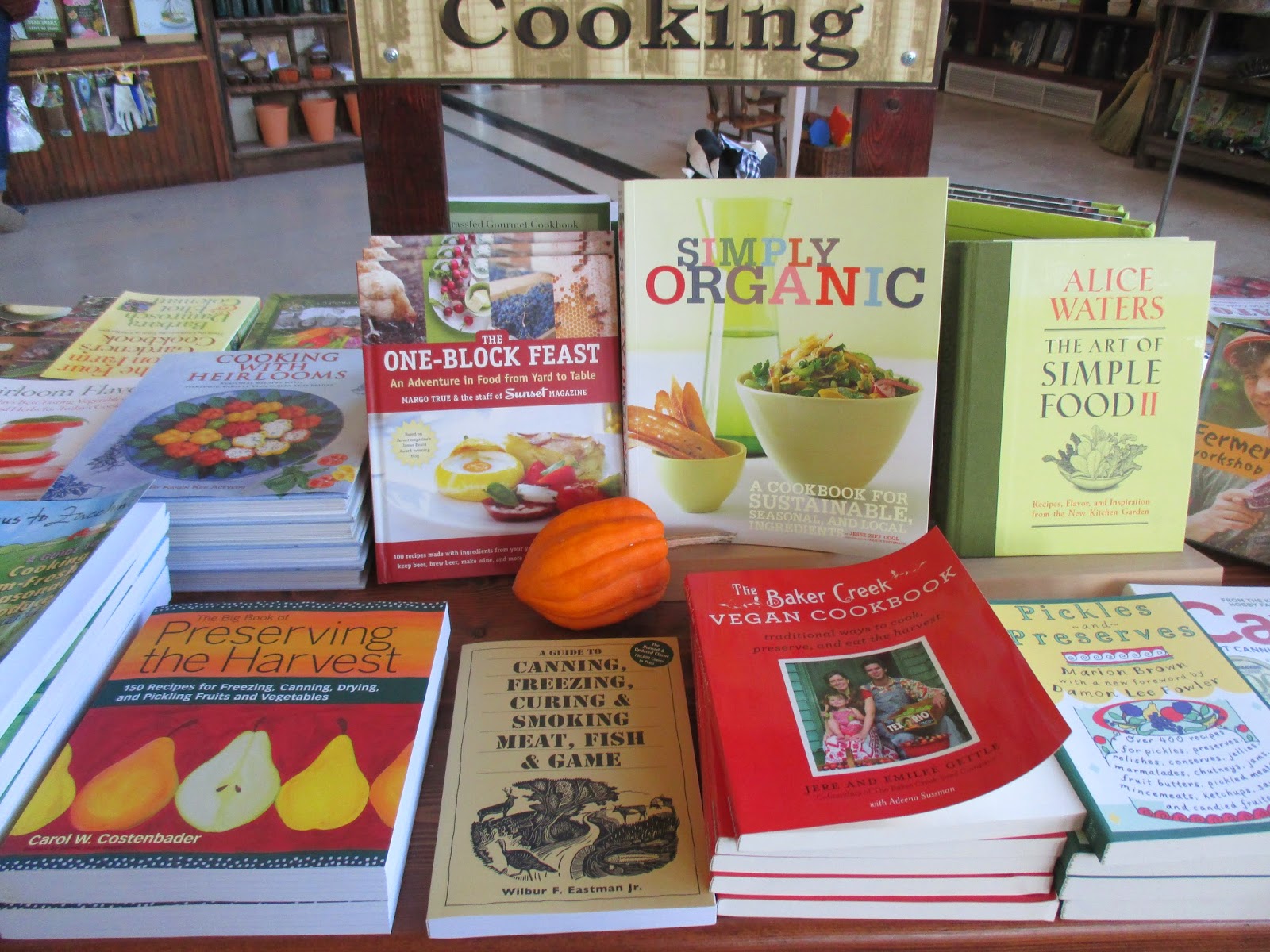
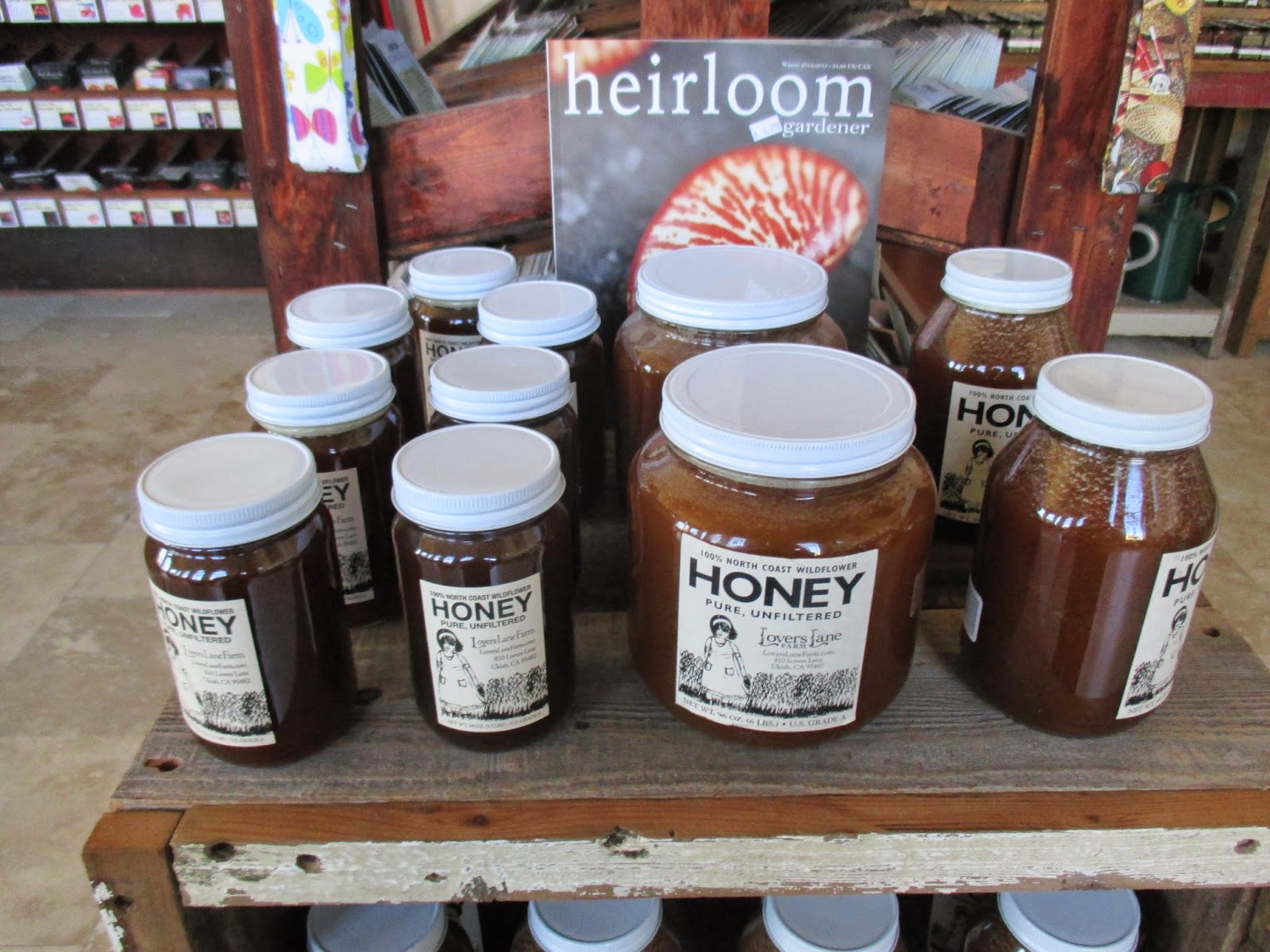
You will find lots of books, Honey, garden tools, and everything a gardeners heart might desire, beside more than thousand heirloom seeds. Here are some photo impressions to "wet your appetite".
.


.


.


.


.


.


.


.


.

Petaluma Seed Bank
199 Petaluma Blvd. North
Petaluma, CA 94952
Phone (707) 773-1336  


If you are wondering what a Seed Bank is - these heirloom seeds are sold in a former bank in Petaluma - but that's just a fantastic name and a coincidence that a bank resided once in the same building where this store is now located. 
.
According to Wikipedia: A seed bank (also seedbank or seeds bank) stores seeds as a source for planting in case seed reserves elsewhere are destroyed.  It is a type of gene bank.  The seeds stored may be food crops, or those of rare species to protect biodiversity. The reasons for storing seeds may be varied. In the case of food crops, many useful plants that were developed over centuries are now no longer used for commercial agricultural production and are becoming rare.  Storing seeds also guards against catastrophic events like natural disasters, outbreaks of disease, or war. 
.
Read also: How to Save Seeds by Modern Farmer and a photo article by the LA Times about the Seed Bank in Petaluma.

.

<><><><><>

.


Desert Gardens Near Berkeley, CA

.

.
One Women - One Vision - is the mission for the Ruth Bancroft Garden in Walnut Creek, a lovely small town not far from Berkeley / Oakland in the eastern San Francisco Bay area. 

It's not only a small botanical garden, dedicated to drought-tolerant plants - important in California, and in the whole South-West of the US - but offers lots of educational programs to garden owners, such as: 


  • Successfully Growing Agaves at Home
  • Succulent Propagation Workshops
  • Beginner's Garden Photography .

Here are some photo impressions from a recent visit:
.


.


.


.


.


.


.


.


.


.


.


.


.

Visitors cannot only stroll through the gardens and admire the beautiful Succulents, Cacti and Agaves, they can also purchase small plants and maybe convert their own gardens into such a desert paradise - and at the same time save water.  Enjoy your own visit there!

.

<><><><><>


Thursday, February 19, 2015


Roundup, Pesticides, Your Kids and Autism

.

.
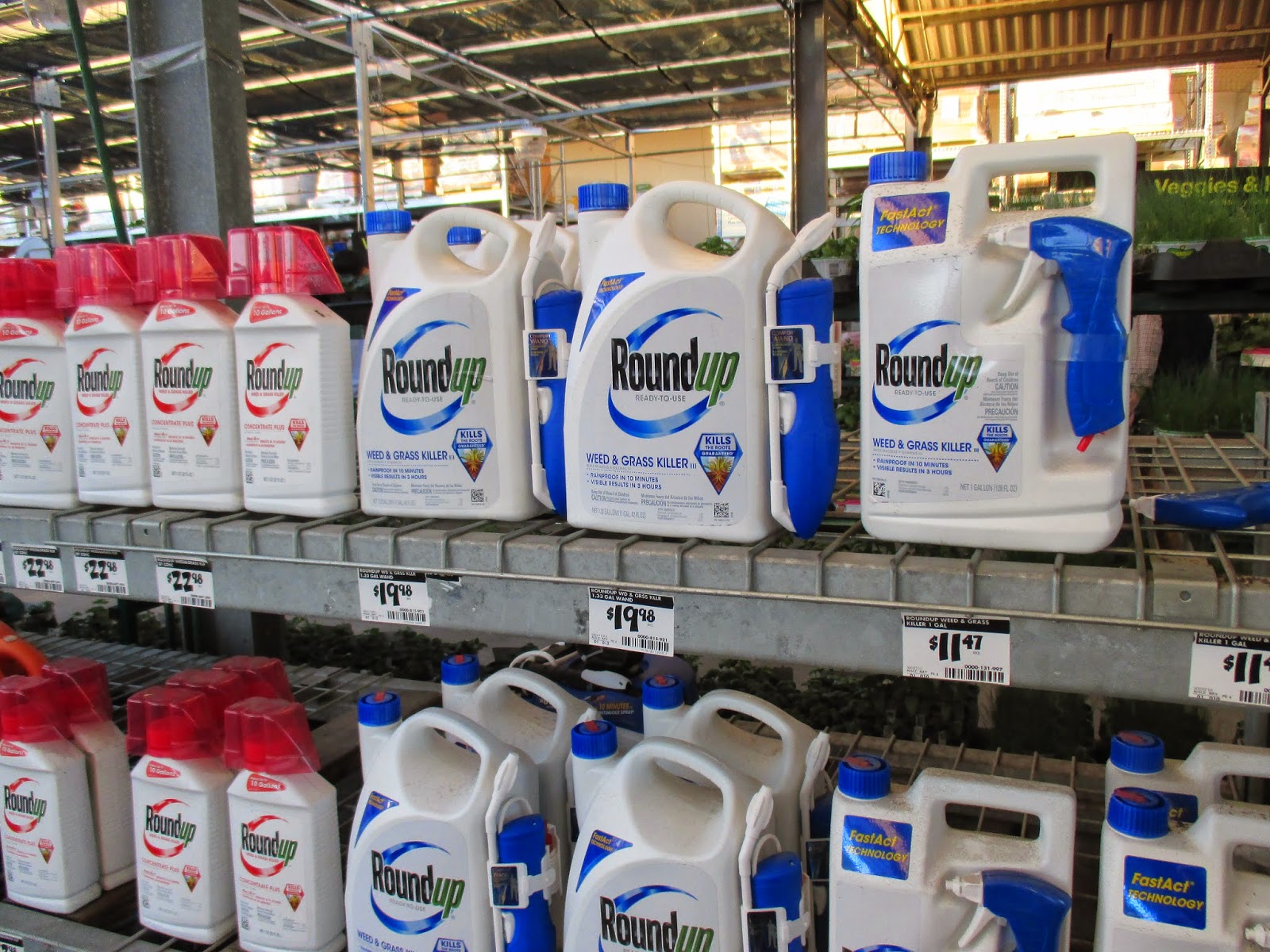
Traveling in the USA, I was shocked to discover these enormous shelves of Roundup in a garden center. Banned in Canada and Europe, these poisonous products are freely applied in gardens instead of pulling weeds out... No one seems to care.  I even witnessed people in flip-flops, bare legs and without any protection to spray their gardens with Roundup while their children were playing next to them. UNBELIEVABLE!

By 2025 half the newborn will be Autistic! That is the conclusion of Stephanie Seneff, Phd., a professor and senior research scientists at the Massachusetts Institute of Technology.  She warned at a recent conference that:  “At today’s rate, by 2025, one in two children will be autistic.” 
.
She noted that the side effects of autism closely mimic those of glyphosate toxicity, and presented data showing a remarkably consistent correlation between the use of Roundup on crops (and the creation of Roundup-ready GMO crop seeds) with rising rates of autism.

"Children with autism have biomarkers indicative of excessive glyphosate, including zinc and iron deficiency, low serum sulfate, seizures, and mitochondrial disorder."

Read the whole article here.
.
It gets even worse:


Glyphosate Herbicide Found in Breast Milk of American Mothers

In the first ever testing on glyphosate herbicide in the breast milk of American women, Moms Across America and Sustainable Pulse have found ‘high’ levels in 3 out of the 10 samples tested. The shocking results point to glyphosate levels building up in women’s bodies over a period of time, which has until now been refuted by both global regulatory authorities and the biotech industry.
The levels found in the breast milk testing of 76 ug/l to 166 ug/l are 760 to 1600 times higher than the European Drinking Water Directive allows for individual pesticides. They are however less than the 700 ug/l maximum contaminant level (MCL) for glyphosate in the U.S., which was decided upon by the U.S. Environmental Protection Agency (EPA) based on the now seemingly FALSE premise that glyphosate was not bio-accumulative.

Read more.Glyphosate-containing herbicides are the top-selling herbicides in the world and are sold under trademarks such as Monsanto’s ‘Roundup’. Monsanto’s sales of Roundup jumped 73 percent to $371 million in 2013 because of its increasing use of genetically engineered crops (GE Crops).
.


.

Glyphosate is Not the Only Culprit According to the National Pesticide Information Center fact sheet, glyphosate is not included in compounds tested for by the Food and Drug Administration's Pesticide Residue Monitoring Program, nor in the United States Department of Agriculture's Pesticide Data Program. However, a field test showed that lettuce, carrots, and barley contained glyphosate residues up to one year after the soil was treated with 3.71 lb of glyphosate per acre (Wikipedia).
.
Weed Resistance: 
Over the 16-year period since genetically modified crops were introduced, "herbicide-resistant crop technology has led to a 239-million-kilogram (527-million-pound) increase in herbicide use in the United States between 1996 and 2011. Resistance evolves after a weed population has been subjected to intense selection pressure in the form of repeated use of a single herbicide.Weeds resistant to the herbicide have been called 'superweeds'.

Glyphosate is the active ingredient in herbicide formulations containing it. However, in addition to glyphosate salts, commercial formulations of glyphosate contain additives such as surfactants which vary in nature and concentration. Laboratory toxicology studies have suggested that other ingredients in combination with glyphosate may have greater toxicity than glyphosate alone.
.

Inert Ingredients Amplified the Toxic Effect on Human Cells
Until now, most health studies have focused on the safety of glyphosate, rather than the mixture of ingredients found in Roundup. But in the new study, scientists found that Roundup’s inert ingredients amplified the toxic effect on human cells—even at concentrations much more diluted than those used on farms and lawns.
One specific inert ingredient, polyethoxylated tallowamine, or POEA, was more deadly to human embryonic, placental and umbilical cord cells than the herbicide itself – a finding the researchers call “astonishing.”
“This clearly confirms that the [inert ingredients] in Roundup formulations are not inert,” wrote the study authors from France’s University of Caen. “Moreover, the proprietary mixtures available on the market could cause cell damage and even death [at the] residual levels” found on Roundup-treated crops, such as soybeans, alfalfa and corn, or lawns and gardens.  Read more in this article by Scientific American.

Scientific FraudOn two occasions, the United States EPA has caught scientists deliberately falsifying test results at research laboratories hired by Monsanto to study glyphosate.


Wednesday, November 26, 2014


Amazing Travel Destination for Plant Lovers


The Grand Turks Islands boast not only the most beautiful beaches in the world, but you can also discover a very interesting flora and fauna in the “Turks”. 

.


.

Plants and Flowers

Agaves, called Sisal locally, were commercially grown until the 1920’s.  Today Sisal plants – Agave – can be seen around the islands growing wild and some have also been planted in the Museum Garden.

Native plants that can be found include the Turks Head Cactus, Sea-Island Cotton, a wide variety of Orchids, Native Oak and Mahogany (both used for boat building), Mangroves, Lignum Vitae, silver and green Buttonwood, Sea Grape, wild yellow Allamanda, Acacia, Sea Oats and Cordia. 

.


.


There are also a wide range of plants that have been brought here such as Aloe Vera, Coconut and wild Pomegranate. 

.


.

Grand Turk Island's nature has fantastic objects to shoot award-winning photos. 
Capture your memories!  Amazing cameras at bottom prices:

.


Bird Watching
The salt ponds and inland marshes serve as excellent feeding grounds for resident and migratory birds. Search for Great Blue Herons, Flamingos, Osprey and Pelicans or Egrets, Terns, Frigates, Boobies and other water birds.

As part of the National Parks system more than twelve small cays have been set aside and protected for breeding grounds. 170 species of bird can be found in the Turks and Caicos Islands from Pelicans and Flamingos to Osprey and Cuban Crows. These bird species provide a paradise for ornithologists.


.


.
<><><><><>
.


.


.

Tuesday, August 12, 2014


Marvelous Hydrangeas Bloom All Summer and Fall

.

.
Walking through residential areas these days makes me wonder what it would be like, if those lovely Hydrangeas would not exhibit their brilliant show of late summer and early fall bloom beauty.  Gardens would look pretty dull after all the summer blooms are spent.  So, why not plant more Hydrangeas in your gardens?  The don't require work and are reliable for years to come, and cost less in the long run than annuals.
.

Hydrangeas at Wilkerson Mill Gardens
Last February I visited Wilkerson Mill Gardens south of Atlanta, GA, where they have a HUGE variety of Hydrangeas, possibly the largest in the country.  It was amazing to see them budding. Wish I could be there in  May when they start blooming in the South. If you are in the area, make the trip, here is a map, it's worth seeing. If not, the Wilkerson's are also shipping.

.


What blooms so beautifully in yards across the country around June/July are big orbs of blue, white, green and pink balls of Hydrangea flowers on leafy shrubs. These so-called mopheads (a type of Hydrangea macrophylla) are staples in gardens around the country.  Many Hydrangea Macrophylla varieties can produce pink to deep blue blooms (even on the same plant), depending on the soil's pH.
.

But there are also these delicate Lacecaps that have flat heads dotted with color and ringed with four-petaled florets, with climbing varieties that can cover house walls easily. And then there are Panicle Hydrangeas with white cone-shaped flowers.  However, not only shrubs grace yards, in the past years elegantly formed small Hydrangea PeeGee trees have been bred or better said trained into their shape, and became very popular.
.


.
PeeGee Hydrangeas on the East Coast
These Hydrange paniculata 'Grandiflora' (PG or PeeGee) are very popular on the East Coast and around the Maritimes in Canada, where they often reach the size of Apple trees. PeeGee's  tend to turn pink as the blooms age.  There are many varieties and forms of H. paniculata such as 'Limelight' and 'Tardiva'. Limelight is an especially beautiful paniculata and is also one of the most popular.
There are also easy-care species native to the U.S., such as the shade-tolerant Oakleaf Hydrangea and cold-hardy smooth Hydrangea.
.

The Origins of  Hydrangeas
Hydrangea has been celebrated for centuries, especially for their long blooming times. Imported from Japan, China, and Europe in the 19th century.
The Hydrangea most commonly known is Hydrangea macrophylla. In the U.S., the variety ‘Merritt’s Supreme’ was developed and is currently the most popular variety among Hydrangea growers.
.


How to Propagate Your Own Hydrangeas?
Many well-established Hydrangeas, especially the Annabelle and Arborescens 'Bounty' variety send out shoots, which can be cut from the mother stem and planted to a moist, shady area with well-draining soil. Another method is to take cuttings.  Use a very sharp, clean knife, and cut from a branch of the hydrangea shrub about 5-6" long. Many experts say the cutting will work best if taken from a branch that did not flower this year.  Strip the leafs off - but leave two or three.  Dip cuttings in #3 Rooting Hormone, poke a  deep hole with a pen and insert the Hydrangea cutting into damp vermiculite, coarse sand or other sterile medium. Water pot well and allow to drain. Make sure soil is moist but not soggy.  Some people even succeed with rooting Hydrangeas in water.
.

Dry Hydrangeas for Year-Round Pleasure
One of the easiest ways to preserve these flowers is to allow them to almost completely dry on the plant. On a dry day, cut the stems the length you need for making floral arrangements. Strip off all leaves and then find a dry place indoors where the flowers can finish drying.
.

What about your garden, which Hydrangea varieties spruce up your late summer and fall garden? What are YOUR favored Hydrangea and which ones do you plan to plant this year.  Garden centers offer right now steep discounts, don't miss their sales.
.

Tips on how to enchourage Hydrangea's to bloom
http://lakeviewnurseries.com/why-wont-my-hydrangea-bloom/

How to change Hydrangea Colors
http://www.hydrangeashydrangeas.com/colorchange.html

How to prune Hydrangeas
https://www.youtube.com/watch?v=rZbqpD1ihmQ

Answers to Hydrangea Questions
http://www.usna.usda.gov/Gardens/faqs/hydrangeafaq2.html

.
<><><><><>
.


Hyper Smash

  Pingate

Wednesday, July 11, 2012


Gardens in Venice, Italy?


.


.
Green spaces in this city of water and stone?  It's easy to overlook gardens and lush islands hidden among Venice's dense alleyways and canals. 

Between the 1600's and 1800's the city of Venice was dotted with hundreds of little gardens. These oases are often hard to find and sometimes inaccessible - to be discovered only by those with a passion for horticulture and a spirit of adventure.  Stay away from crowded places; experience the Piazza San Marco at dawn or by moonlight, and spend the other hours exploring less familiar but fascinating byways in the city.

Some of the garden treasures:
Close to the Palazzo of Cà Rezzonico, which houses the "Museum of 18th Century Venice", you can find a splendid reconstruction of a traditional palace garden, featuring typical, geometric flowerbeds, a pergola and a Venetian well can be seen.

Another green space which gives the modern-day visitor to Venice an idea of how the city's 18th century gardens might have looked is Cà Tron, now home to Venice's University Institute of Architecture.

Still relatively unknown public parks : the Savorgnan Garden near to the Guglie Bridge, the Groggia Garden in Cannaregio and the Royal Gardens next to St Mark's Square are all worth a visit.


Hotel gardens
A number of Venice's most beautiful gardens are now owned by the city's luxury hotels. One of these is the Rizzo Patarol garden, which is the property of the Grand Hotel dei Dogi, in the Cannaregio district. Designed as botanic garden at the start of the 18th century, Rizzo Patarol was later modified according to the romantic fashion. In 2002, the garden was carefully restored and further enhanced by the addition of numerous species of rose, clematis and hydrangea.

Across the canal from the Dorsodurso to the Giudecca, a green island with vineyards growing around Palladio’s church, Il Redentore, and a lovely flower garden at the Hotel Cipriani (their swimming pool is also a summer pleasure). Plants and flowers alternate with vegetable gardens, orchards, and vineyards, the latter apparently much loved by Casanova.


Tudy Sammartini's secret garden tours
Venice by Tudy Sammartini: The city like you’ve never seen it before.
Gardener and author Tudy has spent decades restoring Venice's gardens, oases of green that thrive amid the dense alleyways and canals of the city. Discover some of her personal favourites, often tucked away in private residences and noticeable only for the wisteria flowing over the balustrades. Your tour could include nymphs, powder-pink roses and manicured hedgerows at the childhood home of Casanova, or a family garden shaded by a Canadian maple, with beds of lavender and Virginia creeper climbing up next door's loggia. Tours last half a day, taking in up to five gardens, with plenty of personal insight from Tudy - in English, French and Italien. Her latest book is
Half-day tour €350 per group of  maximum 20 people. tudysammartini@gmail.com,
http://www.veneziasammartini.com


Ca' Zenobio's garden
A breath of fresh air in Venice ... escape the heat at Ca' Zenobio's garden.  A restored garden lies behind the simple facade of Ca' Zenobio, an 18th-century palazzo in the Dorsoduro district. Courtyard gates open on to a patchwork of neatly trimmed lawns and pathways leading towards a neo-classical library. Arches of delicate pink roses complement flowerbeds, citrus and cypress trees, palms, ferns and statuary. Art exhibitions are held regularly in the palazzo. Part of the building is used as a guesthouse, offering 22 spartan rooms (most overlooking the gardens), with original tiled floors and vintage furniture. Breakfast is served outside during summer.
Palazzo and garden visit, €3.
Double rooms from €56. Dorsoduro 2596
http://www.collegioarmeno.com

Peggy Guggenheim's garden
Peggy Guggenheim lived in New York, Paris and London before settling in Venice, at Palazzo Venier dei Leoni on the Grand Canal. She first opened her art collection to the public in 1949, with a display of sculptures in her garden. Today, after seeing paintings by Miró, Kandinsky and her former husband Max Ernst inside, visit the Nasher Sculpture Garden.  A sort of art-nature trail, it includes such renowned artists as Alberto Giacometti, Marino Marini and Henry Moore.
Adults €12, students under 26, €7.
Dorsoduro 704
http://www.guggenheim-venice.it

Querini Stampalia garden
A short walk east of St Mark's Square you will find inimalist plantings and a neatly trimmed lawn. The ground floor of the palazzo was redesigned by architect Carlo Scarpa in the 1960s, and includes an eclectic garden that fuses elements such as Byzantine-style mosaics and a Japanese pebble stream. Lilies resting on the water remind you of Venice's delicate balance of land and sea.  The palazzo's houses contemporary art exhibitions, an extensive public library and elegant 18th-century rooms.
Palazzo and garden €10. Santa Maria Formosa, Castello 5252
http://www.querinistampalia.it
.

.


Gardens on islands of Venice:

Venissa, Mazzorbo
Once you have visited the lace shops of Burano, it's well worth wandering over the 60m footbridge that connects it to the small, lush island of Mazzorbo. In the shadow of its ancient campanile, the new upmarket Venissa hotel, restaurant and walled vineyard have been reviving the island's fortunes in recent years. Six cosy rooms in a restored manor house overlook the lagoon and grounds, but if you are just here for the day, orchards, fish farm and rows of vines are free for the public to roam around.
Line 12 from Fondamente Nuove to Mazzorbo, 34 minutes.
Double rooms from €150 B&B.
http://www.venissa.it

Island of San Giorgio Maggiore
Palladio's imposing Church of San Giorgio Maggiore is a familiar sight in the St Mark's basin, yet he also designed the adjoining monastery. Regular guided tours of the complex include the library, the elegant Cypress Cloister and the newly restored refectory. You can also lose yourself in the monastery's Borges labyrinth, a green maze created in the grounds to honour Argentine writer Jorge Luis Borges (1899–1986), who loved Venice. On special occasions, the foundation also runs tours of the monastery's sprawling private parkland, featuring rows of white Vicenza stone separated by box hedges. Classical concerts are held there in summer. Open Saturdays and Sundays, €10. Groups during weekdays upon reservation.
Line 2 from San Zaccharia, two minutes,
http://www.cini.it

.

.

Island of Torcello
Torcello is a tiny island of tranquility and dreams of past glory. A canal path winds from the landing stage, past small holdings and tiny boats used by the island's handful of inhabitants. Climb the bell tower for views over island and lagoon and lunch in the garden at the exclusive Locanda Cipriani or try Villa '600, a restaurant with a homely interior, terrace and lawn.
Line 12 from Fondamente Nuove to Burano, then Line 9 from Burano to Torcello (42mins and 5mins),
Locanda Cipriani, 29 Piazza Santa Fosca
Villa '600, 12 Fdm. Borgognoni

Island of Sant'Erasmo
For centuries Sant'Erasmo has supplied the city with fresh fruit and vegetables, and today its 750 inhabitants are mostly farmers who sell produce directly to Venice's restaurants and markets. A holiday resort until the late 18th century, Sant'Erasmo still feels like you've escaped to the country. Venetian families moor their boats and picnic on the sandy beach, where you can rent kayaks for exploring the lagoon and the monastery on the nearby island of San Francesco del Deserto. Bicycles can be rented from Il Lato Azzurro, a small hotel near the beach that offers the only accommodation on the island. It has newly refurbished bright, comfortable rooms, and a restaurant, serving local produce. Cycle the coastal path that runs along the south of the island and you can spot the wading birds that frequent the marshy shoreline.
Line 13 from Fondamente Nuove to Sant' Erasmo Capannone (28 minutes)
Kayak rental, reservation +39 041 528 5329.
Hotel Il Lato Azzurro, double rooms from €70
http://latoazzurro.it

If you go: Avoid the summer months, especially July and August. Best time to see Venice is in May, June and October.  Enjoy your trip!


Sources and further reading: 
Book:  Verdant Venice: Gardens in the City of Water by Tudy Sammartini  at Terra-Ferma.it  €39
http://www.guardian.co.uk/travel/2012/jun/28/venice-green-spaces-gardens-top-10
http://www.italytraveller.com/en/e/venetian-green

Monday, June 4, 2012


Peonies Forever


“In peaceful old gardens that remain unfretted by changing fashions and modern introductions we are apt to find huge bushes of the old May-flowering PEONY… ” said Louise B. Wilder, in "Color in My Garden", published in 1918.

Antique peonies are real survivors, you will find them in most old gardens, as they can almost live forever.
There are some early magenta blooms and even earlier bright red fernleaf ones, but most of them are famously known as Memorial Day Peonies because that’s when they start blooming.

Peony Tips:

  • They do need sun, but not too much; with most varieties, you can get decent flowers from a half day’s worth and the farther south you are, the more the peonies can use a break from broiling afternoons.
  • Be sure to plant shallowly – those fat growth buds should be no more than an inch and a half below ground. The number one cause of bloom failure is over-deep planting… or, over time, the gradual movement of compost and mulch that buries those buds as effectively as if you had done it yourself.
  • They don’t like acid soil; if your rhododendrons are doing great, it’s a sign you should add some lime to the peony bed before you start planting. Fall is the best time to plant (and only one to divide).
  • Never in the compost! The Botrytis blight that plagues them – their own personal fungus: Botrytis paeoniae - is ever present, even on apparently healthy growth, so everything that leaves the peony bed should stay gone: discarded bouquets , the fall cleanup pile, Everything. Put it in the garbage bag.
  • Peonies last a long time as cut flowers and can be held in bud stage for weeks –  in a cool room. 


Peonies are very tough, if undisturbed, which is part of their charm. Also very handsome when not flowering; the leaves make a lovely hedge behind later blooming flowers and are also a good screen to mask the ripening foliage of spring bulbs. Deer and rabbits do not eat them. They do not need dividing - ideal plant for every garden!


. . . Hyper Smash

Dogs and Lawns - oh my!


Do you love your dog, but when you look at your lawn you could get really mad at him or her?

Consider the kind of maintenance your lawn gets. The soil beneath a highly fertilized lawn already contains large concentrations of nitrogen - and a little more, courtesy of a dog doing his duty, is enough to push the grass over the edge.

  • Turn on the hose and flood the spot if the deed has just been done. Yet, even within a few days, a thorough flushing should head off any damage, and before long the grass will grow back as good as new.
  • In cases where the damage has been in place for a while, dig out the damaged turf and flush the soil with plenty of water to dilute the excess nitrogen.
  • Reseed or re-sod the spot.

Female-dog urine is not more potent than that of males. It causes more trouble simply because females tend to urinate all at once in one spot. Urine damage has nothing to do with acid, so canine dietary supplements that alter the urine's pH have no effect on the "burn" spots.

BEST REMEDY IS TO WALK THE DOG FREQUENTLY, STARTING IN THE EARLY MORNING, NOT GIVING HIM OR HER A CHANCE TO URINATE ON THE LAWN.


6 Tips for Easy Gardening


Gardening can be so easy and a fun way to relax from all the stress. Gardeners create beauty and even save on buying produce. Here are 6 tips to make gardening as simple as possible:

1. Start with great soil 
Healthy plants get less diseases, attract less insect pests and require less water. Plus you won't have to fertilize every other week. Begin with an analysis of your existing soil. You can have all the essential nutrients tested or just the pH. Many professional nurseries provide this service. If your soil is deficient in any minerals or nutrients, amend the soil according to their recommendations.Then add regularly organic matter, such as compost, sea weeds (for those who live in coastal areas) or shredded leaves - done with your lawn mower in fall or spring  .

2. Compost
Slow release, organic fertilizers and compost can help supplement deficient nutrients. But feeding plants with synthetic fertilizers can actually destroy the beneficial organisms and organic matter within soil and only provide a short fix. It's like turning your garden into a drug addict. It will need regular doses of fertilizer and more and more to get the same effect. Make your own compost, just wrap your fruit or vegetable kitchen scraps into a sheet of newspaper, add dry leaves and grass clippings, sprinkle a shovel of soil over it, water - and you will have nice compost soil in no time - at least in the summer. Do the same in winter and you will have it ready when the planting season starts.

3. "Right plant for the right spot"  
You certainly want to plant sun lovers in the sun and ground covers where they can roam. But consider how efficient it would be if you put all your water hogs together so you could just drag the hose to one area and be done. Plants such as Astilbes, Hostas and Hydrangias for shade and Sedums, Yarrows or Lambs Ear for sunny gardens, will look good at all season and don't need deadheading, pinching or staking.

4. Low Maintenance Perennials 
Make the backbone of your garden perennial flowers that can take care of themselves.
And if you plant flowers that are re-seeding a lot, such as Purple Cone Flower don't forget to cut the blooms once they are spend. However don't cut down any spring flowers that grow from bulbs (Tulips, Daffodils etc.) as they need to get nutrition from the air and sun in order to store them. Just let them dry out. If you are a savvy gardener you have planted large late spring/summer flowers in front of them, such as Peonies or Hydrangeas.

5. Raised Beds & Containers
It's much easier to control your garden if it has definite boundaries. Containers provide the ultimate in control. You control the soil, water, exposure and even limit the growth of the plants in the container. Raised beds separate the garden beds from their surroundings. Ideally, lift the beds up by 6 inches or more. You'll have the benefits of controlling your borders and you'll be saving your back from some bending.

6. Mulch!  Mulch! And more Mulch!
Again, this is common sense and something you've been told a hundred times.Yet many gardeners only view mulch as decoration. Sure, mulch does make a garden look more attractive, saves weeding time, but it also keeps the soil and plant roots cool and retains moisture so you can water less often.

Think about it: When a leaf falls in the woods, no one would pick it up. Leaves, plant litter and other organic debris cover the forest floor, grass layers build up over the prairie and rocks and gravel top off the sandy soil in desert areas. No matter what the climate or topography, the soil in nature is covered with some kind of mulch. It pays for us to apply this lesson in our home gardens as well, to reap the benefits that nature has enjoyed from the beginning.

Best of all: mulching prevents weed seeds from seeing the light of day and sprouting. A mulch on top of your soil reduces weeds in two ways: First, it blocks the weed seeds that blow into the area from above by providing a less hospitable germination bed than bare soil. Second, it blocks many weed seeds already in your soil which may try to sprout up from below.

Moreover, mulch conserves moisture. Water evaporates more quickly from soil that is left naked. A mulch not only shades the soil from the hot sun, but organic mulches soften the earth and improve aeration as they slowly decompose. This softening encourages plant roots to reach down deeper, where they are more likely to find moisture on their own.Gardeners are able to cut down on watering, weeding and fertilizing time. The deeper the mulch, the more weeds you will block.

WARNING:  NEVER buy colored mulch. It is full of poisenous dyes and certainly not healthy for your plants -  it stinks like chemicals and has none of the natural Cedar benefits. And it is actually produced by chemical/paper companies.  Use only natural cedar mulch!

Gardening is fun and can be really simple if you follow these basics. Enjoying your gardening hobby, even the simple tasks and don't forget to smell the Roses.


. . . Hyper Smash

Saturday, March 31, 2012


Impressions from the Niagara Area in Spring


The Niagara area is not only a wine-lovers paradise, but also for gardeners. And April is the best time to visit: very few tourists but blooms in abundance: Magnolia trees, Forsythias, Cherry and Peachtrees, Tulips and Daffodils as far as you can see. Enjoy a wonderful day in bloom!


Healthy Gift from the Ocean for Your Garden


Scientific Description of Seaweed: loose colloquial term encompassing macroscopic, multi-cellular, marine algae. The term includes some members of the red, brown and green algae.

Seaweeds are consumed by coastal people, particularly in Asia, but also in South Africa, South America, the Canadian Maritimes, Scandinavia, Ireland, Wales, California and Scotland.

Seaweed is an ingredient in food (icecream, yellies) toothpaste, cosmetics and paints. Seaweed extract is used in some diet pills (got the hint?) and it is a source of iodine, necessary for thyroid function.

Alginates are used in wound dressings, and in production of dental moulds. Seaweed is currently under consideration as a potential source of bioethanol. And this is the best use of all: Seaweed as wonderful fertilizer.

Gardeners who live in coastal areas are blessed with this free source of nutrition for their plants.Inland gardeners can find liquid Seaweed Fertilizer in specialty garden shops. Distillers of this product claim:

  • More flowers! Up to 25% more flowers
  • Benefits plants during drought and stress through enhancing uptake of nutrients
  • Better germination of seeds when soaked in liquid seaweed solution
  • Stimulates root growth in young transplants
  • Greener Lawns
  • Greater vegetable crop yield
  • Fending off bugs

How can Seaweed Fertilizers fend off bugs?
When the seaweed fertilizer dries it gives a layer of salt around the soil and deters the slugs which are most harmful insect to your plants giving it a natural slug repellent properties. Plus it also creates a crust around the soil to deter other burrowing bugs from getting into the soil. And also seaweed fertilizers can also be mulched into the soil giving it a barrier to help protect the roots of your tomato or other plants. Even house plants can benefit by replacing their plant food with a good quality seaweed fertilizer.

What types of Seaweed Fertilizer are there beside the liquid form?
  • Kelp Meal which usually comes in pellet form.
  • Concentrated seaweed fertilizer extracts
  • Powder seaweed fertilizer form

Seaweed has numerous elements such as nitrogen, an element that is needed for photosynthesis. It also contains other trace elements such as magnesium, potassium, iron, and zinc – all of which are essential for keeping a plant healthy and resistant to pests and diseases. These trace minerals can be immediately available to crops when seaweed fertilizer given as a liquid feed. Seaweed will act like a sponge that will help keep water off the roots but store in moisture which will be available to the plants when needed.

In a short sentence: Seaweed is a gardeners best friend!


.

.
Hyper Smash

Thursday, March 8, 2012


Magnolia Tree Propagation


You will need a lot of patience to propagate Magnolias.  Seedlings will sometimes appear under trees, but most propagation is done through seed, cuttings taken in the summer, or from grafting.  Cutting grown plants are vastly superior to most seedlings because they begin flowering two after propagation while seedlings may take 15 to 20 years to bloom. 

Rooting magnolias is not easily done.  Even with intermittent mist systems and rooting hormones, the percentage of successfully rooted cuttings is often very low.  Evergreen magnolias such as southern magnolia, Magnolia grandiflora and sweetbay magnolia, Magnolia virginiana are best planted in early spring. Deciduous magnolias can be planted in autumn or early spring.

Autumn is the better time to plant in the south, while northern gardeners should opt for spring planting. Apply some mulch after planting to moderate soil temperatures and moisture conditions.

Magnolias are beautiful and relatively pest free. Most have large showy flowers and attractive large leaves. Many are evergreen and attractive year round. There are lovely shrub-sized magnolias for the smaller garden too.


It is Possible to Root a Magnolia Tree from a Cutting!
The best time of year to take your cuttings is between July and September when the terminal bud has set.  You will need a good root hormone for this project.


  • Sterilize your knife and glass with rubbing alcohol before you take your cuttings.  Cuttings are susceptible to fungus and disease before they root, so give them a healthy start.
  • Fill small planters with perlite and moisten it. Planters measuring 3 to 4 inches in diameter with an overall height of 3 to 4 inches will suffice. You'll need one planter for each of the cuttings. Pour some of your root hormone into a shallow container.
  • Select the sections of the magnolia tree for your cuttings. You'll need a growing tip of the plant, from 6- to 8-inches long. Cut the clone from the stem with one quick motion so as not to harm the mother plant. Take several cuttings from a mature, healthy magnolia tree to optimize your success rate. Place each cutting in the drinking glass to minimize the amount of oxygen the clone will receive between cutting and planting. Make your cuttings as quickly as possible.
  • Remove all but the top few leaves from each magnolia cutting. To remove the leaves, slice them at the base of the leaves where they meet the stem. Cut a 2-inch slice vertical slice at the base of your cutting to further improve the chances of rooting the magnolia tree.
  • Dip each of the cuttings in the root hormone according to the manufacturer's instructions. If you are using a powder hormone, dip the ends of your cuttings in water first.
  • Insert the tip of a pencil into the center of the perlite to make a hole for your cutting. The hole should only go about 1/3 of the way down into your planter. You need to leave room for the roots to grow. Carefully place a cutting into the perlite so that the root hormone stays put. Gently fill in around the sides of the cutting with the perlite.
  • Place the planters in an area where they will receive indirect light.  You can tent each one with a plastic bag to maintain moisture levels.  Mist the cuttings often and make sure that the perlite stays moist.  Your magnolia cuttings should root in about eight weeks, when you can transfer them into larger 8- to 10-inch pots filled with potting soil.


Dr. William C. Welch, Professor and Landscape Horticulturist at Texas University writes:

Growing magnolias from seed.
The seeds should be collected as soon as possible after the fruit is mature which is usually mid-September or early October. The cone-like fruit should be spread out to dry for several days until they open. The seeds can then be shaken from the dried cone or fruit.
If the seed is to be kept for any length of time, the red pulp should be allowed to dry enough to lose its fleshy character, placed in sealed containers and stored at 32 to 41 degrees F. If stored over winter at room temperature seed will lose its viability. The seed should be cleaned before planting or stratifying. To remove the fleshy seed coat, soak the seed overnight in warm water. Remove the seed coat by rubbing against hardware cloth or window screening. After cleaning, the seeds should be sown immediately or stored for 3 to 6 months at about 40 degrees F and planted in the spring. An excellent way to stratify seeds is to use a polyethylene bag and place alternating layers of a moist medium such as a sand and peat mixture and seeds in the bag. Tie the top of the bag and place in a refrigerator at about 40 degrees. The medium should be just moist enough to stick together but not so wet that it will drip if squeezed by hand.


Whether sown in the fall or stratified in the refrigerator and sown in the spring, the seeds should be covered with about l/4" of soil and mulched to prevent drying. Seedbeds should be kept moist until germination is complete. Partial shade should be provided the first summer for seedlings.