Showing posts with label Spring Bulbs. Show all posts

Wednesday, November 30, 2022


Planting Spring Bulbs: The Popular Heralds of Spring


Snowdrops and crocuses are certainly among the best-known early bloomers.  But primroses, daffodils, anemones, hyacinths, ornamental leeks, and tulips are also attractive species among the harbingers of spring.

The ideal time: As a rule, the early bloomers are planted in autumn.  Around October/November, depending on location is a good time for almost all early bloomers.  If you have missed this time, you can still try your luck at the beginning of the year if the winter is not too severe.  As soon as a few frost-free days are forecast, plant the early bloomers.

The ideal location: The suitable location is completely different depending on the type of flower.  Tulips, for example, prefer sunny spots and can cope very well with a little more dryness.  Snowdrops, on the other hand, like to stand in shady places, such as along walls or under deciduous trees.  Just like daffodils, they need slightly moist soil.


Planting Early Bloomers - the Best Tips

  • Place the bulbs about ten to twelve centimetres deep in the ground.  A bulb planter is very helpful when planting bulbs.  Especially if you want to plant a lot of early bloomers.
  • Leave a space of about 7 to 10 centimetres between the individual bulbs, depending on the type of plant.
  • If the bulbs have already been planted, do not dig them in completely, but leave them about two to three centimetres out of the ground.
  • Plant the bulbs in tubs or pots and keep the soil slightly moist.  Make sure that the soil does not become waterlogged and protect the bulbs from frost.
  • After you have planted the bulbs in the garden, you do not need to worry about anything else.
  • Fertilize the early flowering bulbs as soon as the first leaves appear.

Once you have planted the early flowering bulbs in the ground, most species will later reproduce on their own.  But of course, you can also propagate early bloomers like snowdrops yourself.


The Importance of Crocuses

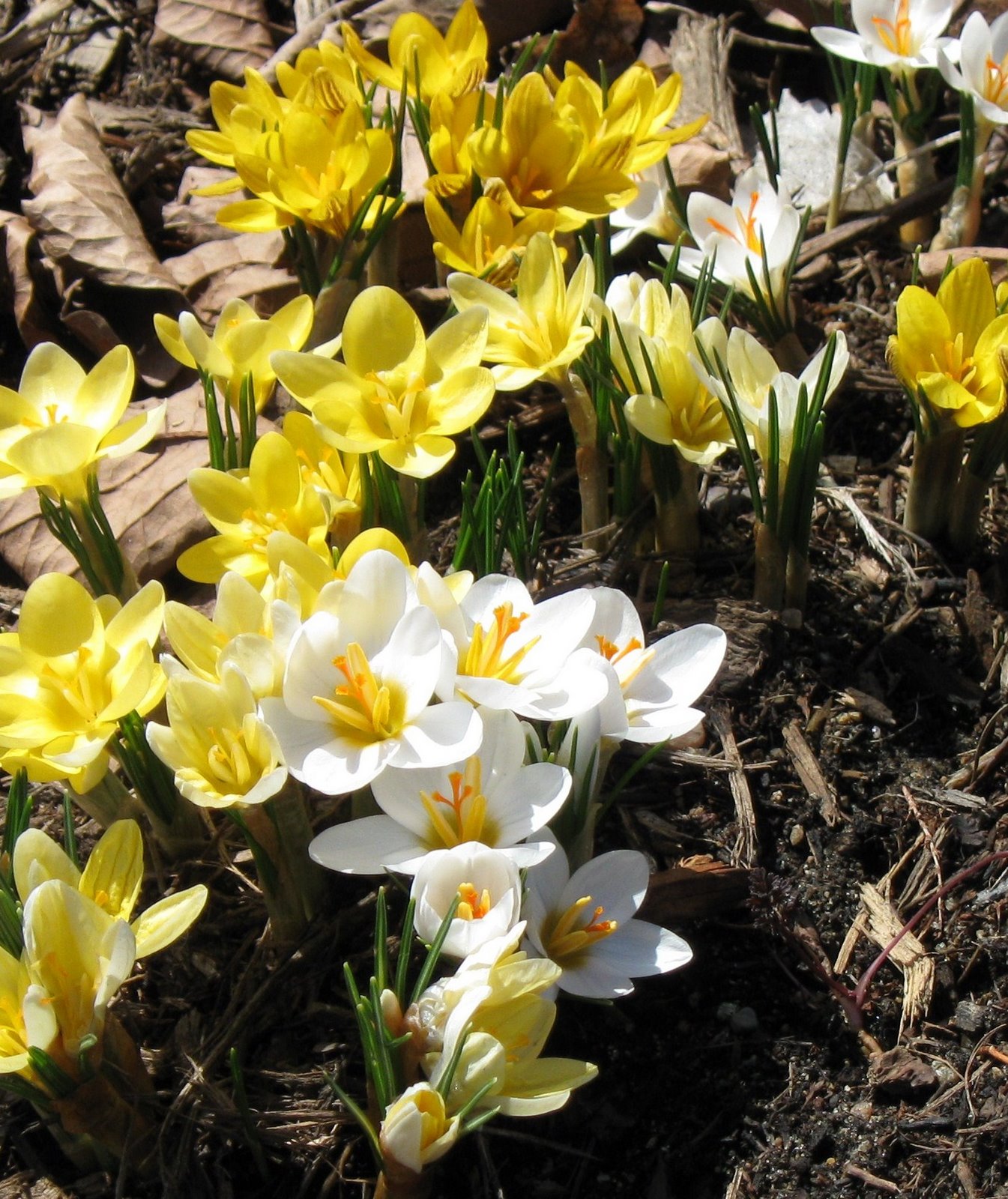
The first crocuses bloom between February and March.  The mostly purple flowers form colourful spots in the snow and herald the beginning of spring.  But crocuses carry a number of other meanings:

The crocus is an iris plant that grows in gardens, in meadows or in the mountains.  Its flowers are usually purple, but there are also yellow or white crocuses.

Crocuses have been around since ancient times.  At that time, the spring-flowering plants were regarded as a sign of hope for supernatural life and symbolised eternal youth.  They were therefore planted on the graves of the deceased.

In addition, crocuses stood for passionate love in ancient times. The saffron crocus in particular was used to prepare a love potion that was drizzled on the beds of newly married couples.

Saffron crocuses are also used as a spice.  They are considered aphrodisiacs.  Since saffron was also used to dye royal robes, for example, they were an expensive commodity.

Saffron crocuses were also a valued medicinal plant against inflammations, eye infections, mood swings and circulatory problems.


Propagating Snowdrops by Seeds

Once you have planted snowdrops, it is usually enough to let nature take its course.  The magic word is myrmecochory.  After the ovary has burst open, the ants pick up the seed to eat the nutritive body and thus spread the seed. 

As convenient as natural flower propagation is, it has the disadvantage that you have no influence on where the snowdrops grow later.  If you want to influence where the snowdrops later sprout in your garden, you have to distribute the seed yourself. The seed is taken from the ovary of the snowdrop.  You can tell when the ovary is mature and the seed is ready to be taken by looking at the downward-sloping flower stalk. Before you plant the seed in the soil in autumn, store it in a cool and dry place. 

Propagating Snowdrops by Dividing them

Snowdrops look pretty and are also quite undemanding flowers.  However, the soil should be as humus-rich and water-permeable as possible.  In March, when the snowdrops are wilting, dig up the clumps.  The clusters consist of mother and daughter bulbs.  After you have separated the bulbs from each other, put them back into the soil immediately so that they do not dry out.

The same method can be used to propagate Tulips or Daffodils, but wait until their leaves are yellow in late spring or early summer.


Planting Spring bulbs now will bring you early color and joyful blooms  - before everything else shows up in your garden. Nothing beats the first spring show of brilliant yellow Daffodils and Crocuses in all colors. They are really eye-catching!


<><><><><>


.


Sunday, September 18, 2022


Plants That are Thriving in Shade


Even if your garden is mostly shady, you still can fill it with color. Many spring bulbs are ideal for planting in shady areas at the base of shrubs, beneath large shade trees, and along woodland paths. At this time of the year, the trees have no leaves yet.  They are the earliest bulbs to bloom and the first food for bees: Snowdrops, Anemones, Fritillaria, Crocus, Narcissus, or Scilla are the first blooms in your garden.  But don't forget to plant them in the fall!  Other spring flowers such as Primula, Pulmonaria, Bleeding Heart, Foamflower, Spiderwort, Aquilegia, or Obelia.


Quite a few plants are thriving in shade gardens from early summer into fall.  Some are colorful, some are white-blooming, and some have attractive silver leaves.  However, flowering shrubs bloom best with some sun (preferably in the morning because the hot afternoon sun isn't a friend to shade lovers). And if you're planting shrubs or perennials, which come back every year, make sure they are suited to your hardiness zone. 


Here is a selection of flowers that don't mind shade to plant this early fall or next spring - beside begonias, pansies, or impatiens:

Astranti: the Most Beautiful Shade Perennial You’ve Never Heard Of 

https://laidbackgardener.blog/2017/08/01/astrantia-the-most-beautiful-perennial-youve-never-heard-of/

https://seedterra.com/astrantia-masterwort-purple-seeds-astrantia-major/


Indian Pink (Spigelia marilandica)

https://savvygardening.com/shade-loving-perennial-flowers/


Brunnera Macrophylla: Silver Leaf Plant for Shade 

https://www.gardenia.net/plant/brunnera-macrophylla-looking-glass-siberian-bugloss

https://www.fromhousetohome.com/garden/compact-shade-plants/

https://www.gardenia.net/plant-variety/brunnera-macrophylla-siberian-bugloss


Switch Grass

https://www.bluestem.ca/panicum-rotstrahlbusch.htm


Japanese Painted Fern

https://www.thespruce.com/how-to-grow-and-care-for-japanese-painted-ferns-4691739


Goatsbeard

https://www.gardeningknowhow.com/ornamental/flowers/goats-beard/goats-beard-plant-info.htm


Astilbe

https://www.gardendesign.com/plants/astilbe.html


Variegated Solomon’s Seal

https://www.gardenista.com/posts/gardening-101-solomons-seal/


Hardy Cyclamen: My Favored Fall Shade Plants

https://garden-dream.blogspot.com/2021/09/hardy-cyclamen-becoming-my-favored-fall.html


Ligularia

https://www.gardenia.net/plant/ligularia-dentata-desdemona


Heuchera in all Colors: yellow, copper, or maroon

https://www.provenwinners.com/learn/heuchera


Hostas in blue-green, grey, or yellow - avoid the boring green ones...

https://www.gardeningknowhow.com/ornamental/foliage/hosta/growing-hosta-plants.htm

.


As you can see, there are dozens and dozens of flowering blooms that gardeners can plant in the shade. Many people think that if they have a shady garden they can’t grow flowers. Nothing could be further from the truth! If you have a garden space with less than full sun, you can still have a beautiful flower garden.


Monday, October 25, 2021


Plant Cheerful Spring Flower Bulbs Now


Did you already plant your spring bulbs?  From the end of September to the end of October is the best time, depending on which hardiness zone you live.  Spring bulbs will definitely shorten the winter, bringing lots of cheerful colors into your garden - long before everything else is blooming and before the trees will show their leaves.


Plant Daffodils, Alliums, Tulips, Hyacinths, Crocus, Snow Drops, Scilla Siberica... in groups of seven, nine, or eleven bulbs - each one to two inches apart from each other.  Plant them directly behind other perennials to avoid seeing their withered leaves after blooming.  Cut the blooms and their stalk after they fade, and let the leaves soak in the sun and healthy soil - in order to store nutrition for next year's flower show.  


The most important thing is that the part of the garden where the flower bulbs are to be planted must not become too wet during the winter.  Water that remains in puddles several days after rain will absolutely ruin bulbs.  After all, they originate from dry areas in Russia, Turkey, Iran, and the high plains of Central Asia. 


Crocus, Snow Drops, and Scilla brighten a boring lawn in spring and naturalize easily.  However, mowing your lawn after bloom should wait at least six weeks.


Early spring flowers can bring the color and warmth of spring to your garden weeks ahead of the official springtime - a joyful garden sight!  So, don't forget to plant lots of bulbs NOW.


More Information:

VIDEO

Amazing Spring Bulbs That Beautify Your Garden

https://www.youtube.com/watch?v=6TP3P4cs0Tc


Top Performing Springs Bulbs that Naturalize

https://www.gardenia.net/guide/12-top-performing-spring-bulbs-that-come-back-year-after-year 


Frequent Asked Bulb Questions

https://www.flowerbulbs.com/678/faqs


.

<><><><><>

.


Sunday, April 12, 2020


Why Are My Daffodils or Tulips Not Blooming?


A Checklist of Causes:

Are you feeding with high-nitrogen fertilizer? The first number in the N-P-K ratio should be low; high N=no flowers, so bulb fertilizers aren’t high N?  Use instead one, low in nitrogen with these numbers:  3-6-6 or: 5-10-10.

Did you neglect to feed for more than a year or two? Feed bulbs when they begin active growth - when the green shoots are emerging.  Use an all-natural organic fertilizer intended for bulbs.  Apply according to label directions.

Did you cut foliage back too soon last year?  At least 6 weeks of “ripening” time is needed, with their foliage growing and intact.  In order to hide these yellow leaves, plant the bulbs behind large perennials or shrubs.  They will grow up or bloom at a time after the Daffodils are finished blooming.


Is the area very dry?  Bulbs need ample moisture when they are growing actively. On the other hand, a soggy area is harmful to them.

Is the area filled with tree roots, or with other competing plants who grab all the nutrients and moisture? Areas under evergreens can be inhospitable, for instance (ad well as too shady).

Dividing may be called for - or transplanting to another, better-suited area.

Were the bulbs recently planted or recently transplanted? Both can set back the bulbs for a time.

With daffodils - and bulbs in general - there are some additional triggers of diminished bloom, says the American Daffodil Society.  Read their full list of possible causes:
https://daffodilusa.org/growing-daffodils/non-blooming-daffodils/


What About Tulips?
They need similar care: In the spring, when leaves emerge, feed your tulips the same bulb food or bone meal which is low in nitrogen, the same you use for Daffodils: 5-10-10. Water well. Deadhead tulips as soon as they go by, but do not remove the leaves! Allow the leaves to remain on the plants for about 6 weeks after flowering.

.


Sunday, October 14, 2018


Spring Bulbs to Plant This Fall


Plant these classic bulbs in autumn 
for a glorious flower show next spring.


While it is still early fall and warm outside, the garden centers and nurseries are already fully stocked with spring bulbs for a marvelous, colorful spring garden.


Planting bulbs this fall will reward you with a sea of flowers next spring. While your garden is cold and dreary, the bulbs will be forming roots and preparing to bloom when the weather warms up again.  Popular varieties sell out fast, so buy or order your favorites ahead of time.


If You Have Already Spring Bulbs in Your Garden:
See how you can divide your bulbs and plant them - and also plant new spring bulbs:  https://www.youtube.com/watch?v=sd9cBEx2SC0