Saturday, March 31, 2012


Impressions from the Niagara Area in Spring


The Niagara area is not only a wine-lovers paradise, but also for gardeners. And April is the best time to visit: very few tourists but blooms in abundance: Magnolia trees, Forsythias, Cherry and Peachtrees, Tulips and Daffodils as far as you can see. Enjoy a wonderful day in bloom!


Healthy Gift from the Ocean for Your Garden


Scientific Description of Seaweed: loose colloquial term encompassing macroscopic, multi-cellular, marine algae. The term includes some members of the red, brown and green algae.

Seaweeds are consumed by coastal people, particularly in Asia, but also in South Africa, South America, the Canadian Maritimes, Scandinavia, Ireland, Wales, California and Scotland.

Seaweed is an ingredient in food (icecream, yellies) toothpaste, cosmetics and paints. Seaweed extract is used in some diet pills (got the hint?) and it is a source of iodine, necessary for thyroid function.

Alginates are used in wound dressings, and in production of dental moulds. Seaweed is currently under consideration as a potential source of bioethanol. And this is the best use of all: Seaweed as wonderful fertilizer.

Gardeners who live in coastal areas are blessed with this free source of nutrition for their plants.Inland gardeners can find liquid Seaweed Fertilizer in specialty garden shops. Distillers of this product claim:

  • More flowers! Up to 25% more flowers
  • Benefits plants during drought and stress through enhancing uptake of nutrients
  • Better germination of seeds when soaked in liquid seaweed solution
  • Stimulates root growth in young transplants
  • Greener Lawns
  • Greater vegetable crop yield
  • Fending off bugs

How can Seaweed Fertilizers fend off bugs?
When the seaweed fertilizer dries it gives a layer of salt around the soil and deters the slugs which are most harmful insect to your plants giving it a natural slug repellent properties. Plus it also creates a crust around the soil to deter other burrowing bugs from getting into the soil. And also seaweed fertilizers can also be mulched into the soil giving it a barrier to help protect the roots of your tomato or other plants. Even house plants can benefit by replacing their plant food with a good quality seaweed fertilizer.

What types of Seaweed Fertilizer are there beside the liquid form?
  • Kelp Meal which usually comes in pellet form.
  • Concentrated seaweed fertilizer extracts
  • Powder seaweed fertilizer form

Seaweed has numerous elements such as nitrogen, an element that is needed for photosynthesis. It also contains other trace elements such as magnesium, potassium, iron, and zinc – all of which are essential for keeping a plant healthy and resistant to pests and diseases. These trace minerals can be immediately available to crops when seaweed fertilizer given as a liquid feed. Seaweed will act like a sponge that will help keep water off the roots but store in moisture which will be available to the plants when needed.

In a short sentence: Seaweed is a gardeners best friend!


.

.
Hyper Smash

Thursday, March 8, 2012


Magnolia Tree Propagation


You will need a lot of patience to propagate Magnolias.  Seedlings will sometimes appear under trees, but most propagation is done through seed, cuttings taken in the summer, or from grafting.  Cutting grown plants are vastly superior to most seedlings because they begin flowering two after propagation while seedlings may take 15 to 20 years to bloom. 

Rooting magnolias is not easily done.  Even with intermittent mist systems and rooting hormones, the percentage of successfully rooted cuttings is often very low.  Evergreen magnolias such as southern magnolia, Magnolia grandiflora and sweetbay magnolia, Magnolia virginiana are best planted in early spring. Deciduous magnolias can be planted in autumn or early spring.

Autumn is the better time to plant in the south, while northern gardeners should opt for spring planting. Apply some mulch after planting to moderate soil temperatures and moisture conditions.

Magnolias are beautiful and relatively pest free. Most have large showy flowers and attractive large leaves. Many are evergreen and attractive year round. There are lovely shrub-sized magnolias for the smaller garden too.


It is Possible to Root a Magnolia Tree from a Cutting!
The best time of year to take your cuttings is between July and September when the terminal bud has set.  You will need a good root hormone for this project.


  • Sterilize your knife and glass with rubbing alcohol before you take your cuttings.  Cuttings are susceptible to fungus and disease before they root, so give them a healthy start.
  • Fill small planters with perlite and moisten it. Planters measuring 3 to 4 inches in diameter with an overall height of 3 to 4 inches will suffice. You'll need one planter for each of the cuttings. Pour some of your root hormone into a shallow container.
  • Select the sections of the magnolia tree for your cuttings. You'll need a growing tip of the plant, from 6- to 8-inches long. Cut the clone from the stem with one quick motion so as not to harm the mother plant. Take several cuttings from a mature, healthy magnolia tree to optimize your success rate. Place each cutting in the drinking glass to minimize the amount of oxygen the clone will receive between cutting and planting. Make your cuttings as quickly as possible.
  • Remove all but the top few leaves from each magnolia cutting. To remove the leaves, slice them at the base of the leaves where they meet the stem. Cut a 2-inch slice vertical slice at the base of your cutting to further improve the chances of rooting the magnolia tree.
  • Dip each of the cuttings in the root hormone according to the manufacturer's instructions. If you are using a powder hormone, dip the ends of your cuttings in water first.
  • Insert the tip of a pencil into the center of the perlite to make a hole for your cutting. The hole should only go about 1/3 of the way down into your planter. You need to leave room for the roots to grow. Carefully place a cutting into the perlite so that the root hormone stays put. Gently fill in around the sides of the cutting with the perlite.
  • Place the planters in an area where they will receive indirect light.  You can tent each one with a plastic bag to maintain moisture levels.  Mist the cuttings often and make sure that the perlite stays moist.  Your magnolia cuttings should root in about eight weeks, when you can transfer them into larger 8- to 10-inch pots filled with potting soil.


Dr. William C. Welch, Professor and Landscape Horticulturist at Texas University writes:

Growing magnolias from seed.
The seeds should be collected as soon as possible after the fruit is mature which is usually mid-September or early October. The cone-like fruit should be spread out to dry for several days until they open. The seeds can then be shaken from the dried cone or fruit.
If the seed is to be kept for any length of time, the red pulp should be allowed to dry enough to lose its fleshy character, placed in sealed containers and stored at 32 to 41 degrees F. If stored over winter at room temperature seed will lose its viability. The seed should be cleaned before planting or stratifying. To remove the fleshy seed coat, soak the seed overnight in warm water. Remove the seed coat by rubbing against hardware cloth or window screening. After cleaning, the seeds should be sown immediately or stored for 3 to 6 months at about 40 degrees F and planted in the spring. An excellent way to stratify seeds is to use a polyethylene bag and place alternating layers of a moist medium such as a sand and peat mixture and seeds in the bag. Tie the top of the bag and place in a refrigerator at about 40 degrees. The medium should be just moist enough to stick together but not so wet that it will drip if squeezed by hand.


Whether sown in the fall or stratified in the refrigerator and sown in the spring, the seeds should be covered with about l/4" of soil and mulched to prevent drying. Seedbeds should be kept moist until germination is complete. Partial shade should be provided the first summer for seedlings.


Thursday, February 9, 2012


Very Early Spring Blooms - Indoors


Blooming Twigs Indoors

Longing for Springtime? Force blooms to come early!
Forsythia, Magnolia - already blooming, and wild Azalea twigs (not yet blooming). Two weeks in a vase with lukewarm water and you have a great center piece on your table, just in time for Valentines. More beautiful blooms are from Quince, Apple and Cherry trees. Nothing can make your winter seem brighter than forcing Springtime to come early! Watching little buds emerge is cheering you up in the dreary days of winter.

Tip: Before you place the twigs into the water, pound the part where you cut with a hammer to allow the twigs soaking up the liquid.

Tuesday, January 31, 2012


Moss in Winter


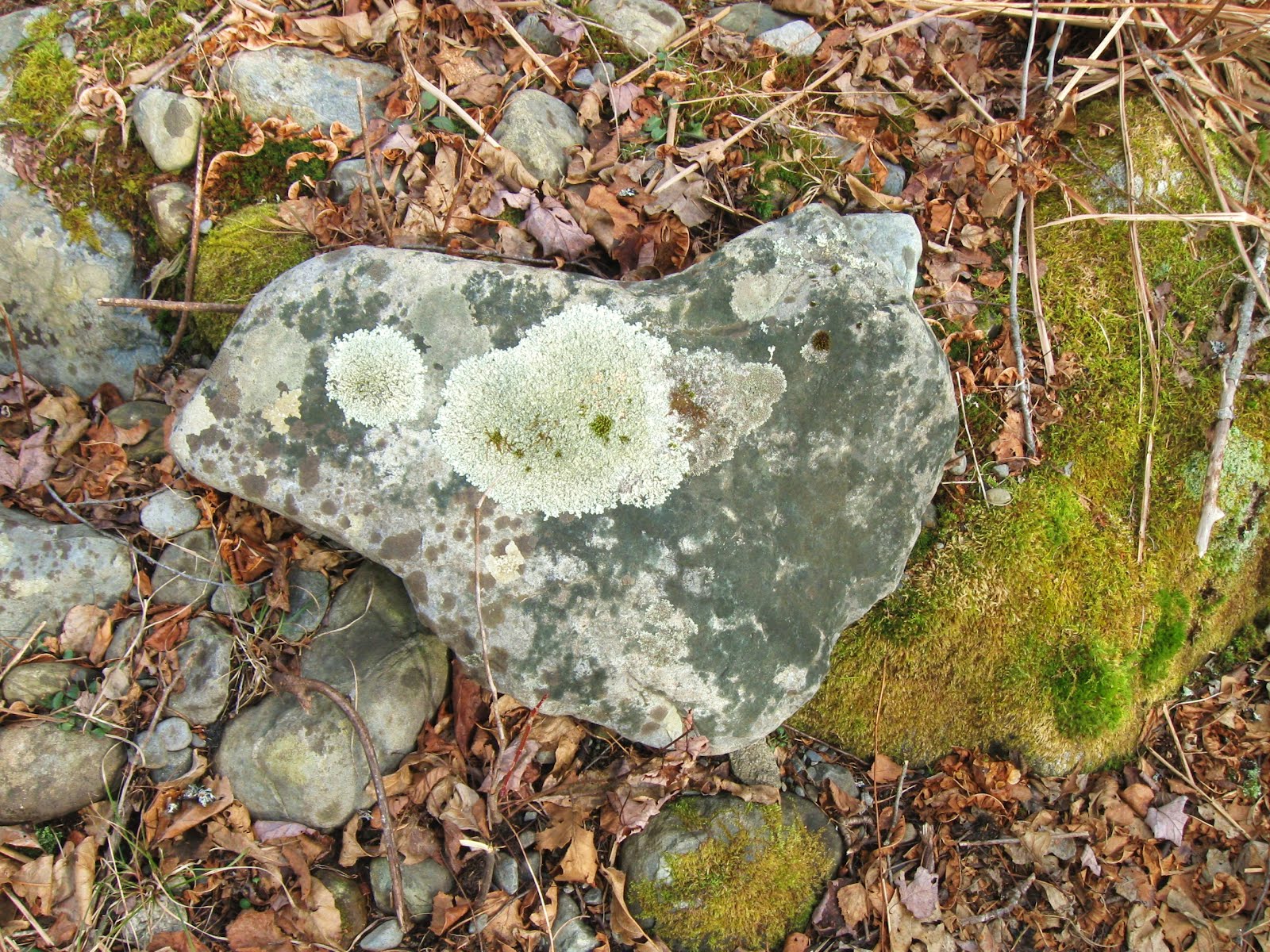
Moss that is hidden by Ferns in summer, show off now, that almost all other plants are brown and dormant. It is an amazing variety (there are approximately 12,000 species of moss classified)and I like stones that are overgrown with moss, wondering if they would strive an a shady spot in my garden...
Since mosses have no vascular system to carry water through the plant, they must have a damp environment in which to live, and a surrounding of liquid water to reproduce.

All photos are taken at the South Shore of Nova Scotia in January.

Wednesday, December 28, 2011


Happy Holidays & All the Very Best for 2012

Monday, December 5, 2011


Apples, Apples, and more Apples


First settlers in Atlantik Canada must have spread tons of apple seeds in their new home country. Apple trees grow everywhere: along golf courses, in ditches and even close to the water, not to mention those, growing in gardens or on farms.

What a pleasure to see them bloom in May and June and ripen into bright red or green fruits in September and October. One would think folks here are happy to harvest free apples and back apple pies, make jelly and jams, apple sauce or juice and cider.

But not so: they fall from trees, rott in the grass or hang on branches until birds or other wildlife picks them.

Apples are instead bought in grocery stores for top dollar and often coming from China! (igitt) or in the best case from South Africa or California.

Can anyone explain this to millions of starving individuals around the world?
I consider opening an apple store - not an Apple Store.

Brilliant Colors on Dark Winter Days


This is a stunning plant in the dark days of winter: it glows with brilliant red berries on an artistic sculpture of branches that are bare of all leafs in December. It seems to me they are especially glorious in the Maritimes and grow abundant on the South Shore.

The perfect addition to a Christmas Wreath, in a doorway planter or as an indoor decoration, mixed with dark-green fir or pine twigs to give it a strong contrast.

The Nova Scotia Wild Flora Society explains:
Ilex verticillata, Winterberry, is a deciduous holly, common throughout Nova Scotia in damp woods and thickets on wet ground with a preference for acid soils. It has distinctive alternately borne leaves which are shiny on top and dark green. Small, creamy white, flowers are produced in mid-summer. The species is dioecious, which means uni-sexual, male and female flowers occur on separate plants.

First Nation people used it as medical plant. The bark is antiseptic and astringent and used internally in the treatment of diarrhoea and externally in the treatment of sores and chronic skin disease.

Bright red berries develop on female plants and are retained after the leaves drop if not eaten by wildlife. Winterberry is native to eastern North America. Horticultural varieties are popular in the U.S.

Propagation
Seed - best sown as soon as it is ripe in the autumn in a cold frame. It can take 18 months to germinate. Cuttings of almost ripe wood with a heel, plant it in August in a shaded position in a cold frame. Leave for 18 months before potting up.

Powell Gardens in Kansas City describe it on their blog
in detail: http://powellgardens.blogspot.com/2011/01/winter-landscape-surprises.html


What a beautiful gift of Mother Nature to lighten up our dreary Winter days with those cheery red berries.

Wednesday, November 16, 2011


Japanese Garden in Seattle


Located within the Washington Park Arboretum, a 3 1/2 acre formal garden designed and constructed under the supervision of world-renowned Japanese garden designer Juki Iida is enchanting visitors. A must-see in Seattle and opens in mid-February already.


http://www.seattlejapanesegarden.org

Short Video:
http://www.lonelyplanet.tv/Clip.aspx?key=D17D38A7D40FBE75

Thursday, November 10, 2011


Food Film Festival Wolfville, Nova Scotia


Melange of great Chefs and great films

If Robert Redford can turn Park City, Utah, into a film festival destination, Michael Howell believes he can do the same for Wolfville, drawing parallels between the home of the famed Sundance Film Festival and Wolfville, which has the Al Whittle Theatre on Main Street.

Howell, chef-owner of Tempest Restaurant in Wolfville, is organizing the second Slow Motion Food Film Fest November 10 - 13. At the first festival in 2009, 1,000 people came out for a retrospective of classic food films like Babette’s Feast and Ratatouille. Other films are:

Land Awakening, set in Greece, France, Italy, Spain and Canada, the 89-minute feature is lovingly photographed and "an unbelievably beautiful view of the world."

Blood into Wine, a documentary about the singer for the rock band Tool moving to Arizona and opening a winery, gets its Canadian premiere at 6 p.m. Saturday.

Another Canadian premiere is El Camino del Vino, an Argentinian film about a sommelier who loses his sense of taste and his journey to recover it. The movie, which has been written up in Wine Spectator magazine, screens at 9:30 p.m. Saturday.

At 8 p.m. at the Harvest Gallery, learn from an expert How to Really Taste Wine.

Jason Priestley will take part in the festival’s opening "Barn Dinner" on Thursday at the Wolfville Farmers Market, joining these celebrity chefs in cooking a four-course meal.

- Craig Flinn (Chives),
- Dennis Johnston (FID Resto),
- Peter Dewar (NSCC),
- Jason Lynch (Le Caveau),
- Luis Clavel (Atlantica Hotel),
- Peter Jackson (formerly of Jacks Grill in Edmonton),
- Renee Lavallee (The Feisty Chef),
- Chris Velden (Flying Apron),
- Brad Bowden (Glen Arbour) and
- Jesse Vergen (Saint John Alehouse)

There will be awards for best documentary feature, best documentary short, best feature and best feature short. Winners will be given papier mache snails, the symbol of the worldwide slow-food movement.

Information on the festival can be found at http://www.slowmotionfilmfest.ca

Friday, October 28, 2011


Beautiful Wildflower Images by Lee Hiller-London


At http://Chime.In I just found amazing photos of wildflowers by famous artist and avid hiker Lee Hiller-London
Have a look at her blog and thousands of beautiful images at these websites:

http://leehiller.com/Book.html

http://www.redbubble.com/people/leehiller/collections/1703-wildflowers
or on Amazon.com


What is Chime.In?

While Facebook has earned billions of dollars selling ads next to the content uploaded by their 800 million members, users haven't seen a dime from their posts.

It's an arrangement that extends across many of the web's largest social networking sites -- and one serial entrepreneur Bill Gross plans to change.

Gross, the CEO of UberMedia, which owns several popular social networking apps, is launching a new social media site on Tuesday, Chime.in, that will effectively pay its users to contribute.

Share with Chime.in and Chime.in will share with you. The site, which allows individuals to post photos, links, videos and text in two thousand character "chimes," will give users 50 percent of the revenue it earns from selling advertising on their profile pages. Individuals or brands that sell that real estate themselves can keep all of the proceeds from the ads.

Saturday, October 22, 2011


Pruning of Magnolias and other trees and shrubs


Congratulation to your wonderful early spring blooming tree. If it is a Southern Magnolia it can become huge. If it is a tulip magnolia you are still looking at a 20' tall and wide tree. After your Magnolia has finished flowering, you can then let it prune back. Although they don't like to be pruned heavily.


Trees and Shrubs to Prune in Late Spring/Summer, After Bloom:
•Azalea (Rhododendron species)
•Beautybush (Kolkwitzia amabilis)
•Bridal Wreath Spirea (Spirea x vanhouttei)
•Flowering Crabapple (Malus species and cultivars)
•Forsythia (forsythia x intermedia)
•Hawthorn (Crataegus species and cultivars)
•Hydrangea, Bigleaf (Hydrangea macrophylla)
•Lilac (Syringa vulgaris)

•M A G N O L I A (Magnolia species and cultivars)

•Mockorange (Philadelphus coronarius)
•Mountain Laurel (Kalmia latifolia)
•Rhododendron (Rhododendron species)
•Serviceberry (Amelanchier x grandiflora)
•Slender Deutzia (deutzia gracilis)
•Weigela (Weigela florida)


Trees and Shrubs to Prune in Early Spring, While Dormant
•Bradford Pear (Pyrus calleryana)
•Butterfly Bush (Buddleia Davidii)
•Crape Myrtle (Lagerstroemia indica)
•Flowering Dogwood (Cornus florida)
•Flowering Plum (Prunus blireana)
•Glossy Abelia (Abelia x grandiflora)
•Golden Rain Tree (Koelreuteria paniculata)
•Honeysuckle (Lonicera fragrantissiam)
•Hydrangea, Peegee (Hydrangea paniculata ‘Grandiflora’)
•Potentilla (Potentilla fruticosa)
•Redbud (Cercis canadensis)
•Spirea (except Bridal Wreath) (Spirea japonica))
•Wisteria (Wistera species)