Wednesday, January 23, 2019


Poisoning Your Soil: Are Gardeners Really “Green”?


Even though more and more "organic" items are offered in grocery stores, yet in the garden or on balconies too often chemicals are in use. Retailers are required by law to provide expert advice on the correct use of poisons or weed killers. That's why the chemicals are trapped behind glass in the stores. However, test purchases for the program "planet e." show: In fact, there is often no counseling at all. 

.
Pollutants:
Garden tools with a gas engine.  Their pollutant balance is indeed significantly worse than the modern car engines.  A two-stroke engine mower emits just as many pollutants per gallon of gas consumed as a 1930s car.  In addition, the exhaust gases are considered to be clearly carcinogenic.
.

Poisons:
A lot of poison is also used for pest control: to kill ants as well as moles, mice or rats. Especially against the annoying slugs, poisonous grain is widely scattered.  Death sentence also for some cats and dogs.

.
Do amateur gardeners poison the environment

and in the end, poison themselves or others? 

.
Plastic:
Another issue is the use of plastic borders, plastic shrub covers, plastic foils, plastic pots, plastic weed fabric, plastic plant signs, plastic decorations... the list is endless.  No garden needs all this crap.  Not any of these items were used by our grandparents.  And they did a lot more gardening than we do.  Why let the industry and retailers tell us what we need in our gardens?  Why not do as nature does?  Plants existed and thrived forever - without the use of plastic.
.
Conclusion:
Of all the products offered at hardware stores, we need nothing, if we hobby gardeners would create our own compost!  Fruit and vegetable scraps, egg shells, coffee or tea grounds, dry leaves, shredded paper, lint, banana peels... All this creates not only good compost, but it also reduces garbage and helps the environment to produce a lot less methane. It's a greenhouse gas which the U.S. Environmental Protection Agency (EPA) says is 20 times! more damaging to the environment than carbon dioxide (CO2).

Only this way gardens flourish! Not from using pollutants, or buying poisons and plastic rubbish. 


<><><><><>

.


Saturday, January 5, 2019


Plant Hardiness Zones


Will my plants thrive and bloom in the coming years? This is the most important question when purchasing flowers or shrubs for your garden. Always check the label carefully!

Plant Hardiness Zones are the standard by which gardeners and growers can determine which plants are most likely to thrive in their location. Maps are based on the average annual minimum winter temperatures, divided into 10-degree Fahrenheit zones.

Due to the moderating effect which the North Atlantic Current has on the Irish and British temperate maritime climate, Britain, and Ireland even more so, have milder winters than their northerly position would otherwise afford.  This means that the hardiness zones relevant to Britain and Ireland are quite high.  Huge landmasses of the interior in Nord America have a much rougher climate: hot summer and ice-cold winter temperatures.
.


Another phenomenon is that relatively small areas or an island often consist of several hardiness zones. For example, Vancouver Island, north-west of Seattle stretches over four different zones: from Victoria to the Elkhorn Mountain, which rises more than 7,000 feet above the Pacific Ocean.

USDA Plant Hardiness Zones
Maximum lowest temperatures in Fahrenheit
USDA Plant Hardiness Zone Map
https://planthardiness.ars.usda.gov/

5a -20 to -15 F
5b -15 to -10 F
6a -10 to -5 F
6b -5 to 0 F
7a 0 to 5 F
7b 5 to 10 F
8a 10 to 15 F
8b 15 to 20 F
9a 20 to 25 F
9b 25 to 30 F
10a 30 to 35 F
10b 35 to 40 F
11 Above 40 F


European Hardiness Zones can be found here:
https://en.wikipedia.org/wiki/Hardiness_zone#European_hardiness_zones

And here are the Canadian Plant Hardiness Zones:
http://bit.ly/2QsaN4b

.


<><><><><>
.


Sunday, December 30, 2018


Southern Trees - Live Oaks


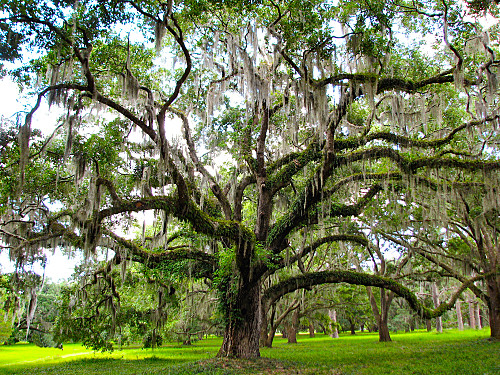
Traveling the Southern States and discovering new trees, shrubs and flowers is such a pleasure!  One of my favored trees down south is the Live Oak, a beautiful, shade-spending, and characterful species.  Spectacular alleys like those in "Gone with the Wind" can be found in many residential neighborhoods in the South!


Live Oak Trees
It is such a pleasure to walk underneath huge Live Oak trees, especially when they are overgrown with silver-green moss.  They are called a "live" oak because it is evergreen, with green foliage year round, rather than going dormant in the winter.

One of the oldest can be found outside of Charleston, South Carolina.
Few trees are as colossal and awe-inspiring as the Live Oak (Quercus virginiana). It's a fast grower, ultimately reaching up to 80 feet tall and 100 feet wide.  The tree in the Angel Oak Park is estimated to be 400-500 years old. It stands 66.5 ft (20 m) tall and measures 28 ft (8.5 m) in circumference.  Thriving in rich, coastal soils and along banks of streams and rivers, moss drapes over its long branches and dances with each breeze.


Live Oak trees' natural habitat is in the States from North Carolina all the way to Texas and from New Mexico up to Oregon - Hardiness Zone 8 and higher.  Their acorns are a sweet attraction to qual, wood ducks, wild turkeys, and whitetail deer.  These and a variety of birds and squirrels nest and make this tree their permanent home.

Live Oaks do best in warm, moist weather.  They also like areas with mild winters.  That makes them perfect for Central Texas.  Live oaks cannot survive prolonged freezing temperatures and icy weather.  The Live Oak does best in soil types that range from well-draining loam to poor-draining clay.  A young live oak needs regular watering.  The best way to water a live oak is to use a drip system for a slow, gradual soaking.


Protect the root zone of a live oak!  You want to limit competition for resources surrounding your live oak.  The best environment for a live oak is one where there is a comfortable root zone (15 ft) that contains mulch.  You may have to remove sod and plants.  You don’t want anything around the tree that can inhibit its growth.


More Sources:
https://en.wikipedia.org/wiki/Quercus_virginiana
http://www.sptreefarm.com/interesting-facts-about-live-oak-trees.html
https://www.fast-growing-trees.com/Live-Oak-Tree.htm
http://www.keepaustingreen.com/care-live-oak/

.
<><><><><>

.

Sunday, December 23, 2018


List of Fabulous Shade Flowers


As longer I garden as more I prefer shade - not only because it is a more pleasant spot to garden in summer.  But also because plants for shade have a more subtle, elegant appearance.  Another great benefit is that flowers which are grown in shade last longer and maintain their color intensity better than those grown in full sun. 


.
You Might Ask:
What perennials, annuals or shrubs can I plant other than Hostas?  Well, there are dozens and dozens of shade-loving plants out there.  See the long list below, that doesn’t even cover those for a warmer climate or the native shade plants.  But first things first, lets start with the soil:


.
Nutritious Soil and Sufficient Water Are a MUST:
No matter where you garden - in shade or sun - your plants will only thrive when you feed them well with the right soil, compost, and regular watering, especially near or beneath trees and large shrubs.  Trees take up all the nutrients and moisture (even prevent rain to reach the soil), so there is nothing left for your attractive flowers - if you don't soak the soil every other day.  A great help is also to cover the soil with mulch to even out temperature difference, avoid weeds and yes, help to reduce watering.
.


Have This List Handy When Shopping for Shade Plants:

PERENNIALS:
Hellebores
Salomon’s Seal
Ladies Mantle
Hostas in blue and yellow
Astilbes: white, red, or pink-flowering
Japanese Ferns
Deadnettle
Spurges (Euphorbia)
Alyssums
Heuchera Copper or Lime
Daffodils
BlueBells
Bleeding Heart


.
Azaleas
Wild Ginger
Pulmonarias (Lungwort)
Siberian Iris
Bigroot Geranium
Anemones
Trout Lilies
Shooting Stars
Trilliums
Foamflowers
Japanese Forest Grass
Primulas
Periwinkle


.
ANNUALS:
Pelargonias
Begonia
Impatiens
Lobelia
Pansies
Coleus
Caladiums


.
SHRUBS:
Mock Orange (Philadelphus)
Hydrangeas (PeeGee, Annabelle, Climbing Hydrangea)
Rosa Glaucia
.


See descriptions and more images for shade plants:
http://garden-dream.blogspot.ca/2016/06/benefits-of-shade-in-your-garden.html
http://garden-dream.blogspot.com/2009/06/new-to-gardening.html
https://www.sunset.com/garden/flowers-plants/shade-plants
.


<><><><><>


Tuesday, November 20, 2018


Grow Your Vegetables in Winter


I learned it by accident: One day I discovered that potato peels I had thrown into the compost started to grow and weeks later I had a nice harvest of new potatoes. They tasted even better than the store-bought - no wonder to the fine compost soil they grew in.
Buy once and keep growing - sounds almost too good to be true. Instead of just composting or throwing away the leftovers, you can grow new plants from them. This not only benefits your wallet but is also an important step against food waste.  Here are just a few examples, there is more produce you can re-grow:
  • Green onion
  • celery
  • ginger
  • garlic
  • potatoes
Green Onions
An onion does not just grow a new plant.  Instead of replanting them, you can also grow and use the green of the onion. The roots of the onion must be placed in a container filled with water and placed in a sunny place. Then you should change the water every few days.  With this care, the green of the onion begins to grow again.  You can also just use the remaining part of a green onion (with the roots on) and place it in moist soil.

Celery
Place the leftover celery stalk in a shallow bowl of water and then place on a sunny windowsill.  Make sure that the core is just covered with water and it is changed every few days.  After a good week, fresh leaves begin to sprout from the stalk.  Now you can put the whole thing in a pot with earth.  A few weeks later you will already be able to harvest new celery.

GInger 
Ginger is not only healthy and delicious, but it's also easy to grow by yourself.  All you need is patience.  Leaving the tubers for some time, it forms small, green shoots by itself. These can be broken off and planted in a pot with soil.  A few months later, when the leaves have died, the ginger root can be harvested.

Garlic
Garlic cloves, which are a little longer, form small shoots.  The growth can be accelerated if the toes are placed in a bowl with a bit of water.  After a few days, the garlic sprouts are a couple inches long and can be harvested.  They taste milder than the originals and are perfect for refining dishes.  If you want to grow a new garlic bulb, plant a toe in a pot with soil.  The pot should then stand in a sunny place and be watered regularly.

Potatoes
You can easily cut a raw potato into pieces, making sure that each piece has two "eyes" and is at least one inch thick.  The potato pieces should then stand in an airy place and dry. After two days, they can be planted in moist soil.  Since the tubers need very nutrient-rich soil, the soil should be best mixed with some compost.  Now a new potato plant can grow!

Get more ideas and images here:
https://www.icreativeideas.com/13-vegetables-that-you-can-regrow-again-and-again/

Best thing is: you can grow these veggies also during the winter on a windowsill.  Enjoy your own FREE produce!


<><><><><>

.

.

Wednesday, November 14, 2018


Avenue of the Giants


If there is only one magic place or travel destination in the United States I had to choose, it would be the Redwood National and State Parks. Majestic trees, no not trees, but century-old giants, growing right and left of US Hwy 101, just South of Eureka, from Southern Oregon into Northern California. Their enormous stems rise like gothic columns almost 300 feet into the sky.  

Once you get off the roads, its almost eerily quiet - and much darker than in other forests, as the crowns of these giants are blocking sunlight and sky views. These are the last remaining old-growth redwood groves in North America, if not the world.  Even if you are not a tree-hugger you are stunned, maybe even you tear up when wandering through these “tree cathedrals”.


.
I Didn’t Do It!
While cutting a car-size hole through ancient redwoods is thankfully no longer permitted, but you can still drive through the Chandelier Tree at Leggett, California, south of the intersection of Highway 101 and Coastal Highway 1, where this enormous redwood continues to stand and grow in spite of its drive-thru traffic.  For me it’s a sacrilege - these trees are holy! … and I never would drive through.

Take at least several days to indulge in nature’s wonders and beauty.  
Inhale the pristine air of the forests, which is neighboured by the Pacific 
Ocean - a terrific mixture!


.
Oregon Redwoods Trail
The best hike starts at Loeb State Park and follows the Chetco River for 0.7 miles before crossing the road and beginning the Redwood Nature Loop.  Loeb State Park is a highlight in itself and features rental cabins, campsites and fishing opportunities.  It makes a good place to stay overnight when visiting the Oregon redwoods.

Directions: From the bridge across the Chetco River in Brookings, turn onto North Bank Chetco River Road (following signs for Loeb State Park) for seven miles to a large sign and parking area on the right. Trailhead GPS coordinates: N42 06.766 W124 11.225


Giant (or coastal) redwoods thrive in the moist, humid climate of the Northern California coast, where marine fog delivers precise conditions necessary for its growth. The fog adds moisture to the soil and helps trap it thereby lowering the rate of evaporation.  Redwoods, particularly coast redwoods, or Sequoia sempervirens are the tallest trees on the planet.

The tallest trees in the world have been given names—because such enormous trees deserve equally grandiose names—and are, in order: Hyperion (~398 feet tall), Helios (~374 feet tall), Icarus (~371 feet tall), and Daedalus (~363 feet tall).  Their thick bark resists fires, insects, and fungi, while their shallow roots absorb dew drops that drip from their needles.

.
Giant Sequoias of Northern California
Giant sequoias thrive in higher elevation habitats than those giant redwoods and grow naturally only along the western slope of the Sierra Nevada Mountains, primarily between 5,000 and 7,000 feet in elevation.  Giant sequoias require the periodic dry heat of the mountains in order for their cones to open and release seeds.
.
More About Redwoods and Sequoias

Giant Redwoods

  • Live up to 2,000 years
  • Have branches up to 5 feet in diameter
  • Bark grows up to 12 inches thick
  • Can reproduce either by seed or by sprout


Giant Sequoias

  • Live up to 3,000 years
  • Have branches up to 8 feet in diameter
  • Bark grows up to 3 feet thick
  • Reproduce by seed only


See a Zoomable Map
http://avenueofthegiants.net/Zoom/map.htm

Culture Not Far From Nature
http://a-happy-traveler.blogspot.com/2015/03/bookstores-in-oregon-and-northern.html

Tallest Trees in the World
http://crosstalk.cell.com/blog/why-redwoods-are-one-of-the-great-wonders-of-the-world


<><><><><>
.

Sunday, October 21, 2018


Gardens of Alcatraz


Once home to some of America's most notorious criminals, and famous all over the world, Alcatraz island is now a tourist attraction in the San Francisco Bay. The first lighthouse on the Pacific Coast, the former prison cells and most of all the historic gardens are luring visitors. 
.
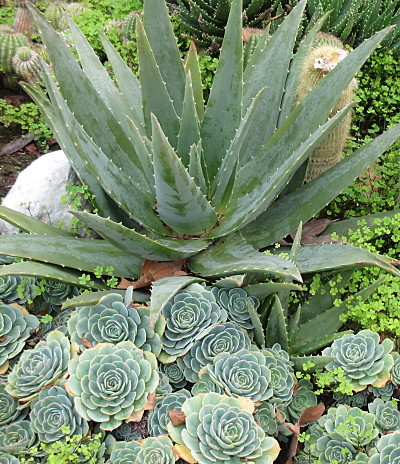
As early as 1869, military inmates began tending the Gardens of Alcatraz.  Many of these inmate gardeners had no horticulture experience, but with vocational training and donated plants, they were able to transform the barren rock into extensively planted terraces, including a rose garden and cutting gardens overflowing with brightly colored flowers.  Alcatraz gardeners/inmates needed tough plants that could survive with little water or care.  Today, visitors to Alcatraz find a landscape alive with fragrant old roses, fig trees, bulbs, and colorful succulents.
.

.
The work was a privilege: not only did it allow inmates to be out of their cells and away from the tension of the prison, but it also offered them a chance to create beauty in a forbidding environment.
.

Getting to the Island
The island is open to visitors every day year-round except for Thanksgiving, Christmas and New Year’s Day.  Although there is not an entrance fee, there is a charge for the ferry service, supplied by a private company under contract to the National Park Service, from Pier 33 in San Francisco.  For additional information on schedules, prices, parking, and to purchase tickets in advance (tickets are made available about 90 days in advance) please visit the Alcatraz Cruises website.  Alcatraz frequently sells out, as much as a week in advance, in summer and near holidays.  In early March a round trip ticket is $30.  The best time to visit the Gardens of Alcatraz is from January to September, and especially in the spring from January to March.


.
A Visitor to the Gardens Gives this Advice:
“Because Alcatraz is surrounded by water whose temperature rarely goes below 50F, the island is literally in a temperature zone warmer than its landlocked neighbors.  January is the most pleasant month to visit because the summer fogs are absent and winds are mild because the temperature differential between the coast and valley are minimal.  And the birds are mostly gone so their droppings are gone too. It's been up in the high 60's on the island while SF is low 60's on the same day.”
.

And Here a bit Alcatraz Garden History:
Once home to some of America's most notorious criminals, the federal penitentiary that operated here from 1934 to 1963 brought a dark mystique to the Rock.  The presence of infamous inmates like Al "Scarface" Capone and the "Birdman" Robert Stroud helped to establish the island's notoriety.  To this day, Alcatraz is best known as one of the world's most legendary prisons.  In the 1920s, hundreds of trees and shrubs were planted as part of a general beautification project.
.

.

The most significant phase of garden construction began in the mid-1930s when Fred Reichel, the secretary to the warden, convinced the warden to allow prisoners to work in the gardens.  At the same time, he sought the advice of the California Horticultural Society and plant breeders on which plants might thrive on Alcatraz and was able to obtain a large variety of Mediterranean-climate plants.  The offspring of many of these plants continue to be found in today’s gardens.

In 1941, prisoner Elliott Michener began a nine-year stint as the head gardener.  He built a greenhouse and was allowed to order large amounts of seeds and bulbs.  His labor helped shaped the terraced gardens on the east side.


After the prison closed in 1963, the gardens were abandoned and fell into disrepair together with everything else on the island.  Plants that required irrigation for survival died while those that were able to make do with natural rainfall and moisture from the frequent fog—mostly succulents—survived.

In 2003, the Garden Conservancy, Golden Gate National Parks Conservancy, and the National Park Service launched a cooperative project to restore the island’s gardens.  With the help of countless volunteers, horticulturists propagated new material from the surviving plants and brought in new introductions appropriate for the harsh climate.
.


Enjoy this unusual garden trip to the Alcatraz prison island!

.
<><><><><>
.


Tuesday, October 16, 2018


Where to Purchase Cannabis in Canada

See how happy Canadians are:


On October 17, 2018, recreational Cannabis is legal in all provinces of Canada.  Which province has the most stores and how well are they prepared for the countdown?

Canadian Provinces
While traveling through the province of New Brunswick in the Maritimes I saw lots of new stores with the "Cannabis NB" sign.  All 20 locations are expected are stocked and staffed across New Brunswick, having already shown off one of the government’s completed cannabis stores in mid-June.

Nova Scotia: The government-owned Nova Scotia Liquor (NSLC) Commission will be the physical cannabis retailer as of legalization day. Eleven NSLC locations across the province will offer about 150 different cannabis products in separate stores within existing alcohol retailers.

Prince Edward Island: Canada’s smallest province will have four government-owned cannabis stores. Locations in Charlottetown, Summerside, Montague and the West Prince region.

New Foundland & Labrador: Canada’s easternmost province will have 24 private retail cannabis locations.  Some smaller businesses made the cut – Tobin’s Convenience in Labrador City, for example – but the majority will be owned and operated by large corporations, such as Loblaws.

Quebec: The plan is to open 20 storefronts “gradually” once legalization takes effect. But so far, the SQDC has only announced 14 locations, with half of them in either Montreal or Quebec City.

Ontario: The OCS (Ontario Cannabis Store) will launch an online-only format as of Oct. 17 - while private businesses will handle all bricks-and-mortar cannabis operations - locations or how many will be allowed to open have not yet been released.

Manitoba: Around 30 cannabis stores stocked and staffed across Manitoba in time for legalization.  The overall goal is to have 90% of provincial residents living within a 30-minute drive of a cannabis store by the end of the decade.

Saskatchewan: 51 draw-winning cannabis retailers (out of 1,500 applications) have been given the approval to open storefronts as of Oct. 17.

Alberta: The AGLCC estimates at least 150 stores will be licensed, stocked and staff by mid-October. More cannabis stores will be in Alberta than in the rest of Canada combined.

British Columbia: An official plan calls for a mix of both privately-owned stores and government-run locations under the “BC Cannabis Stores” banner, but neither appears to have made much progress. Well, I guess there are so many previously opened illegal cannabis operations, so BC inhabitants might not be too excited about the legalization : )
Somewhat similar to Quebec.

Northern Territories: Not even a dozen stores, some government run, some private are in the Yukon and NWT to cater to patrons. Nunavut will be delivered by online stores.
.

College Education in Cannabis Growing Operations
Niagara's College's new cannabis program: On the first day of school, the prof had not only students huddled around him, but also reporters and cameras.
These "pot school" offers intensive hands-on training in growing pot with classes which focus on topics like plant nutrition, climate control, pest control, and plant selection. There are also courses about the regulations governing cannabis in Canada.  The program ends with a field placement for students at a cannabis producer in the region.

"Pot School" in Niagara 
"Over 300 people applied for 24 spots in Niagara College's program, making entry to the pot school very competitive. The two dozen students in the first cannabis class range in age from 21 to 54 and several of them left full-time jobs for the opportunity" reports CBC News.

Even a 
Ph.D. in pot Production...
“The University of Guelph in Ontario has already produced a student believed to have completed North America's first Ph.D. in pot production.”

Read all about Cannabis in Canada on this government website.


.
However, don't consume pot before and while driving as shown in this funny video:
https://www.youtube.com/watch?v=2PLC_cBJwk4


.
<><><><><>


.


Monday, October 15, 2018


Most Colorful Foliage: Caladiums and Coleus


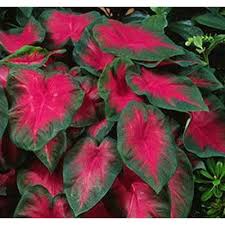
Caladiums
These tropical shade dwellers are a stunning choice for the darker corners of your garden landscape.  Caladiums also make excellent container plants.  Most varieties grow between 18 and 24 inches tall, but dwarf forms are also available.  Because their large leaves are easily damaged by high wind, plant them in a protected location.


.
Caladium Growing 
Caladiums are tropical bulbs that need to be dug and stored after frost blackens their foliage in the fall, just as you would do with Gladiolas or ….. In warm, frost-free regions they can remain in the garden. Indoors, use caladiums as a cheerful houseplant. Just give it medium light and warm temperatures.  Water caladiums whenever the surface of the soil begins to dry. They prefer moist, but not wet soil.  Pinching is for many annual and tender perennial plants—such as coleus—an encouragement to branching and to full, bushy growth.


.
Winter Care
Northern gardeners will need to store caladiums over the winter. Dig the tubers up after the first light frost. Then, brush off the soil and plunge the roots into a box of peat moss and place in a cool, dark, warm location for the winter.  Occasionally sprinkle the bulbs with just a splash of water to keep them hydrated in storage. Replant in pots in the spring and set the plants outside after frost danger has passed.


.
Coleus: Another Colorful Plant for Shade Gardens
Distinctive leaf shapes, intricate patterns, and rich colors rival some of the showiest foliage plants.  Coleus is grown for its ornate foliage in eye-catching colors including white, yellow, red, pink, purple, maroon, copper, and a wide range of greens. Coleus makes an attractive addition indoors or outdoors.


.
Cut It Back
When the weather begins to drop, especially at night, cutting back the coleus flowers will help the plant conserve a lot of energy and food. You do not have to worry about hurting the plant too much if you cut it back too far.  Coleus is a very hardy plant and can handle the cutting. In fact, it will come back even bushier and more colorful than before. intense summer sun which will scorch the leaves.
.


Keep it Moist
Coleus leaves will wilt and may fall off if the soil is too dry. You'll have a much healthier-looking plant if you keep the soil moist at all times. Use a pot with drainage holes and water thoroughly.  Need a container? Check out the stylish self-watering pots available now.  It's just the thing to keep your coleus from wilting this summer.  Dropped leaves indoors?  Low light, dry soil or cold air can cause leaves to drop.  Don't worry - this vigorous plant will replace them when it gets what it wants.
Transplanting indoors will save your plants from freezing.  Carefully dig around the plant and lift out of the soil. Transplant it into a pot with soil that is already moist.  Coleus make a lovely, colorful Thanksgiving dinner table decoration!


.
Propagation Coleus’ is Easy: 
Cut several twigs, stripe most of the leaves off and place them in a water glass.  Exchange the water once a week.  After a couple of days, you will see the first tiny roots appear.  Once the roots are growing sturdy, plant each of the new plants in a small flower pot and place them overwinter on a window sill. 
.

Read More About Coleus and Caladiums:
https://www.wikihow.com/Grow-Coleus
https://www.finegardening.com/article/pinching-coleus
http://www.guide-to-houseplants.com/coleus-plant.html

.
<><><><><>


Sunday, October 14, 2018


Spring Bulbs to Plant This Fall


Plant these classic bulbs in autumn 
for a glorious flower show next spring.


While it is still early fall and warm outside, the garden centers and nurseries are already fully stocked with spring bulbs for a marvelous, colorful spring garden.


Planting bulbs this fall will reward you with a sea of flowers next spring. While your garden is cold and dreary, the bulbs will be forming roots and preparing to bloom when the weather warms up again.  Popular varieties sell out fast, so buy or order your favorites ahead of time.


If You Have Already Spring Bulbs in Your Garden:
See how you can divide your bulbs and plant them - and also plant new spring bulbs:  https://www.youtube.com/watch?v=sd9cBEx2SC0


Friday, September 21, 2018


Seaweed to Improve Your Garden Soil

.
.


If you are living close to the Atlantic, the Gulf or Pacific coast you are lucky as seaweed for your garden is easy to gather.  Gardeners inland have to buy the gardening gold.

Seaweed contains about 60 trace elements, as well as fungal and disease preventatives.  Using seaweed for compost improves soil consistency and increases water retention in sandy or grainy soils.


Amend Your Garden Soil and Compost
Water the seaweed well to remove the salt and work it into the soil or add it to your compost heap.  When using seaweed as compost, it can be used dry or wet.  As a soil amendment, seaweed even deters pests both large and small.  Instead of buying mulch you can even use seaweed to top up your flower beds. It will save water, keeps the soil moist at ground level, eliminates the need to weed and enriches the garden soil.
.

Get More Tips Here:
How to Use Seaweed in the Garden - YouTube Video
https://www.youtube.com/watch?v=0gFUQ2w7lnI

How to Use Seaweed to Mulch Your Garden
https://learn.eartheasy.com/articles/how-to-use-seaweed-to-mulch-your-garden/

Seaweed as Composting Ingredient
https://www.gardeningknowhow.com/composting/ingredients/composting-seaweed.htm


<><><><><>


Sunday, September 16, 2018


How to Propagate Hydrangeas from Cuttings


Select a Hydrangea twig for cutting that should be at least 12 centimeters/6 inches long, has no flower and is new growth.  Take a sharp pair of shears and cut the stem off just below a leaf node.  A leaf node is where a set of leaves is growing. 

Strip all but the topmost set of leaves from the cutting. The cutting should have only two leaves left.  Dip the end of the cutting in rooting hormone.  While rooting hormone which you can purchase at nurseries and garden centers, will increase the chances of successfully propagating hydrangeas, you can still propagate hydrangea shrubs without rooting hormones. 

Find a wide, clear plastic bottle or empty peanuts container that is higher than the twig.  Fill it with planting soil or peat moss, and add water to moisten the soil.  Stick the cutting into the damp potting soil.  It should not touch the plastic device, at least not the leaves.
Close the lid and poke a half dozen holes in it, or if you don't have the lid for the device, place plastic over the top opening and also poke holes in the plastic cover.

Place the pot in a sheltered location out of direct sunlight.  Check the hydrangea cutting every few days to make sure the soil is still damp. In about two to four weeks, the cutting will be rooted.

This method for propagating works for pretty much of all shrubs, only the times to take the cuttings varies between the types and the locations/hardiness zones.  Just google it in typing the plant and the word propagation from cuttings and your planting area.

Have fun with creating new shrubs - almost for free!


<><><><><>


.